Introduction: Why Engine Oil Burning Should Not Be Ignored
Engine oil is an essential component to keep the vehicles running smoothly. It lubricates the moving parts, reduces friction, and helps prevent overheating. It helps the engine to stay precise and provide high value for a longer period.
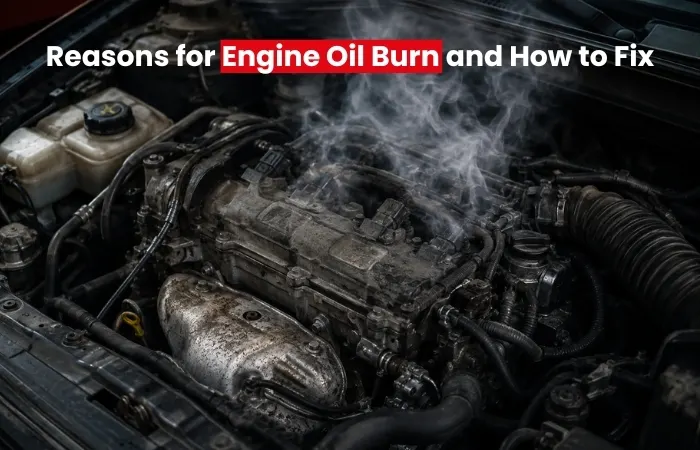
But what if, due to excessive running time, the engine starts burning oil? If the engine starts burning oil, it directly indicates internal engine issues, and ignoring it can cause engine damage and expensive repairs. In this blog, we will tell you common signs, common reasons, and proper fixes for engine oil burn.
What is Engine Oil Burning?
Engine oil burning means motor oil leaking into the engine’s combustion chamber and burning along with the fuel. While a small amount of consumption is normal, heavy consumption can indicate oil burning.
Unlike an oil leak, oil burning causes it to enter the engine, making it hard to detect at an early stage. Over time, excessive oil burning can lead to increased oil consumption, reduced engine performance, higher emissions, and damage to critical engine components.
Common Signs of Engine Oil Burn
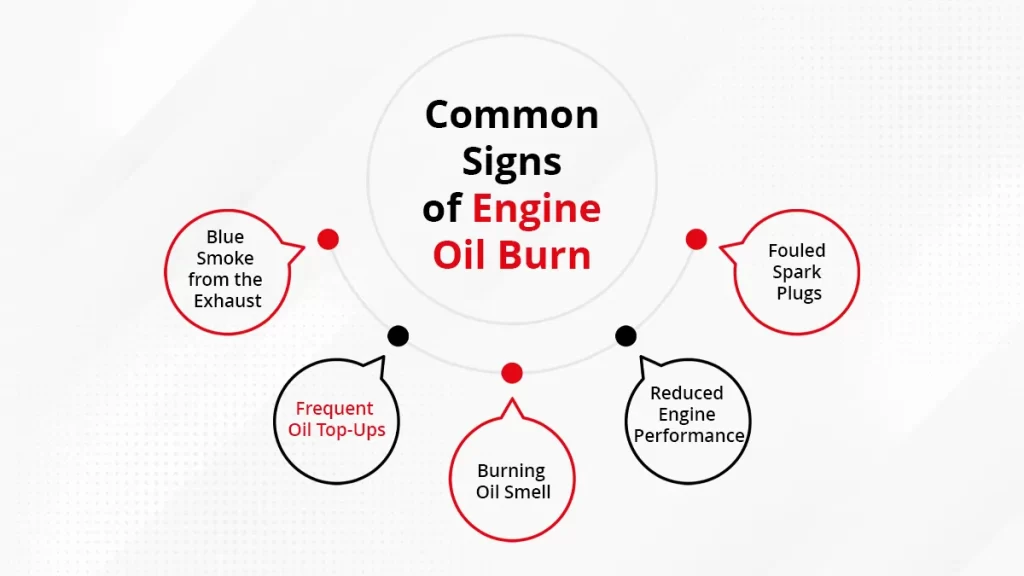
Here are some common signs indicating engine oil burn:
1. Blue Smoke from the Exhaust
When the oil enters the combustion chamber, the engine starts producing blue smoke, indicating that the engine oil is being burned along with the fuel.
2. Frequent Oil Top-Ups
If you find yourself adding engine oil more often than usual, it could be a sign that the engine is consuming or burning excessive amounts of oil.
3. Burning Oil Smell
Oil burning emits a strong odor while driving or after the engine is turned off, indicating that the oil is being burned internally or coming into contact with hot engine components.
4. Reduced Engine Performance
Excessive oil burning can lead to poor combustion, increased friction, slower acceleration, and reduced engine performance.
5. Fouled Spark Plugs
Oil entering the combustion chamber can leave carbon and oil deposits on the spark plugs, affecting their performance and leading to engine misfires.
Main Reasons for Engine Oil Burn
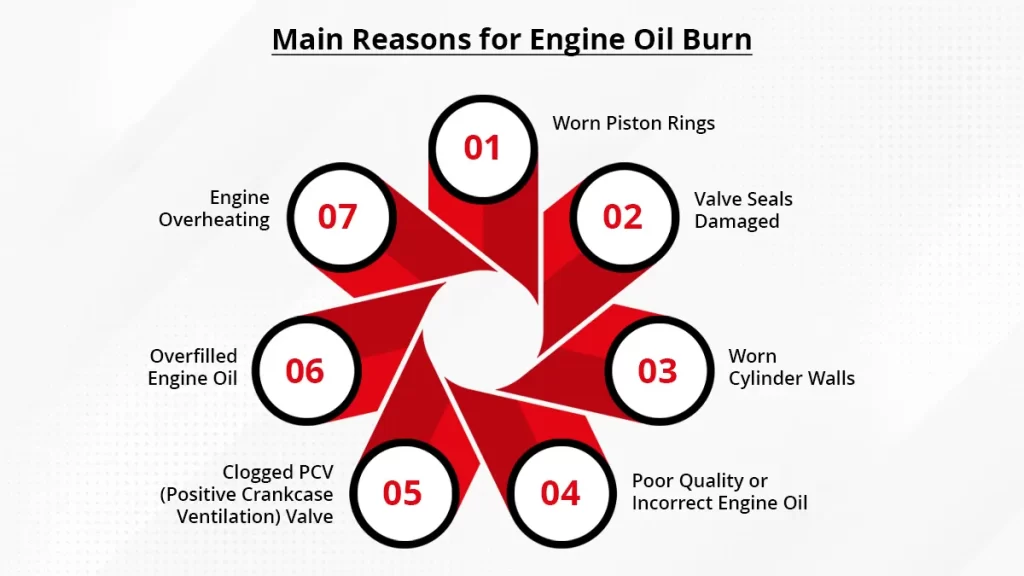
The main reasons why engine oil burns:
1. Worn Piston Rings
Piston rings create a tight seal between the combustion chamber and the crankcase, controlling the amount of oil on the cylinder walls. Piston ring failure lets engine oil enter the combustion chamber and burn with the fuel.
2. Valve Seals Damaged
The valve stem in the valve seals prevents oil from entering the combustion chamber. Over time, these seals can wear out or crack, allowing oil to enter the cylinder and burn during combustion.
3. Worn Cylinder Walls
Excessive wear or damage to the cylinder walls can reduce the effectiveness of the piston rings, allowing oil to bypass the sealing system and enter the combustion chamber.
4. Poor Quality or Incorrect Engine Oil
Using poor-quality engine oil can increase oil consumption. Some oils may burn more easily under high temperatures, leading to excessive oil burning.
5. Clogged PCV (Positive Crankcase Ventilation) Valve
The PCV Valve is an important component that regulates pressure inside the engine. If it gets clogged, excess crankcase pressure can force oil into the combustion chamber, resulting in oil burn.
6. Overfilled Engine Oil
Overfilling the engine with oil can create excessive pressure, allowing oil to enter the combustion chamber and burn during engine operation.
7. Engine Overheating
Excessive heat can damage seals, piston rings, and other engine components. Engine overheating may also cause oil to thin out and burn more easily, increasing oil consumption.
How to Fix Engine Oil Burn
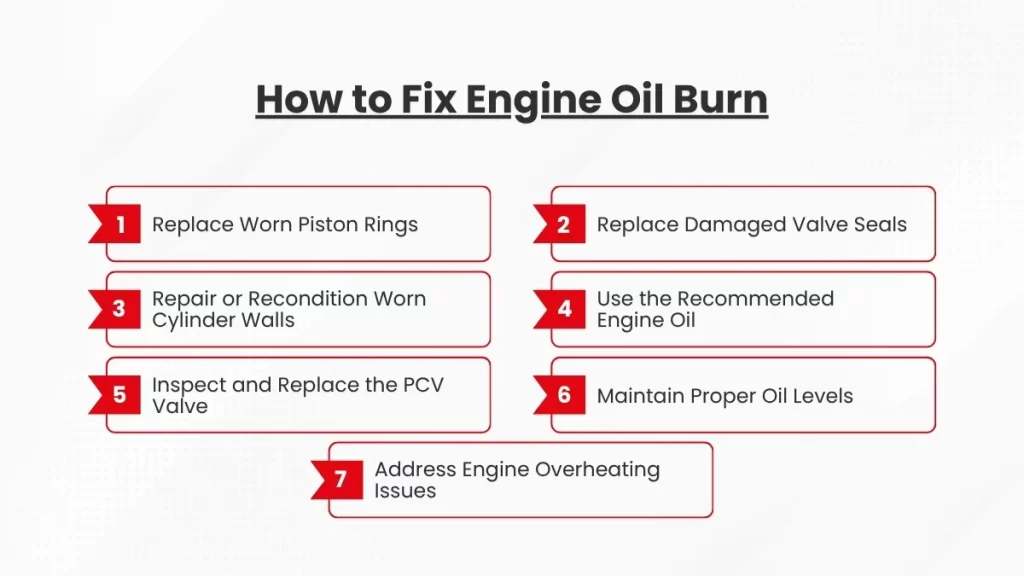
Here are some points to restore engine performance and prevent further damage:
1. Replace Worn Piston Rings
Damaged piston rings are one of the biggest reasons for engine oil burn. Replacing them with newer ones from a trusted manufacturer like Kolbenring can help prevent oil from entering the combustion chamber and increase the life of the piston ring.
2. Replace Damaged Valve Seals
If the valve seals are cracked or worn out, they should be replaced immediately. New valve seals prevent oil from leaking into the cylinders and reduce excessive oil consumption.
3. Repair or Recondition Worn Cylinder Walls
Worn cylinder walls require honing or reconditioning to restore their surface. In severe cases, replacing the cylinder liner may be necessary to ensure proper sealing.
4. Use the Recommended Engine Oil
Instead of using random or cheap oil, use the engine oil that your mechanic suggests. High-quality engine oil provides better lubrication and reduces the chances of excessive oil burning.
5. Inspect and Replace the PCV Valve
A clogged or faulty PCV valve can increase crankcase pressure and force oil into the combustion chamber. Cleaning or replacing the valve when necessary can help restore proper engine ventilation.
6. Maintain Proper Oil Levels
Whenever adding oil to the engine, always check the oil levels. This helps you avoid overfilling it.
7. Address Engine Overheating Issues
Excessive heat can damage piston rings, seals, and other engine components. Fixing cooling system problems and maintaining proper engine temperatures can help prevent further oil burning.
Why High-Quality Piston Rings Matter?
Piston rings are the most important component that helps in sealing the combustion chamber, controlling the flow of engine oil, transferring heat from the piston to the cylinder wall, and preventing oil from reaching the combustion chamber.
Low-quality piston rings wore off easily, allowing engine oil to enter the combustion chamber, leading to excessive oil burning, increased emissions, and reduced engine performance.
Investing in high-quality piston rings is essential. Companies like Kolbenring India, known for their expertise in manufacturing high-performance piston rings, offer reliable solutions designed to meet demanding automotive and industrial requirements.
Conclusion: Engine Oil Burn
Engine oil burning is a bigger problem than we think. It relates to engine issues that should not be ignored, such as worn piston rings, damaged valve seals, clogged PCV valves, and engine overheating. These can lead to excessive oil consumption, reduced performance, and costly repairs if left untreated.
To prevent these issues, you should make early diagnosis, regular maintenance, and use high-quality engine components. Monitoring oil levels, addressing engine issues promptly, and replacing worn parts from time to time helps improve engine efficiency and extend its service life.
Piston rings are also a crucial part of oil control, which is why getting your piston rings from the best piston rings manufacturer, like Kolbering India, is essential to make your engine run smoothly for a long time. Contact us today to discover our great quality piston rings.
FAQs: Engine Oil Burn
1. How can I stop my engine from burning oil?
Ans: You can stop your engine from burning oil by first inspecting the cause and finding if it is because of the worn piston rings, valve seals, cylinder walls, PCV Valve, or the engine oil. As per your findings, replace the faulty component or use a good-quality engine oil.
2. What is the most common cause of engine burning oil?
Ans: A worn piston ring is the most common cause of engine burning oil.
3. Why is my car losing oil but no leak or smoke?
Ans: If your car is losing oil but no leak or smoke, that could mean that your engine is burning oil.
4. Will thicker oil stop engine burning oil?
Ans: Yes, using thicker oil can sometimes stop the engine from burning oil.