Introduction: Why Engine Oil Seal Matters?
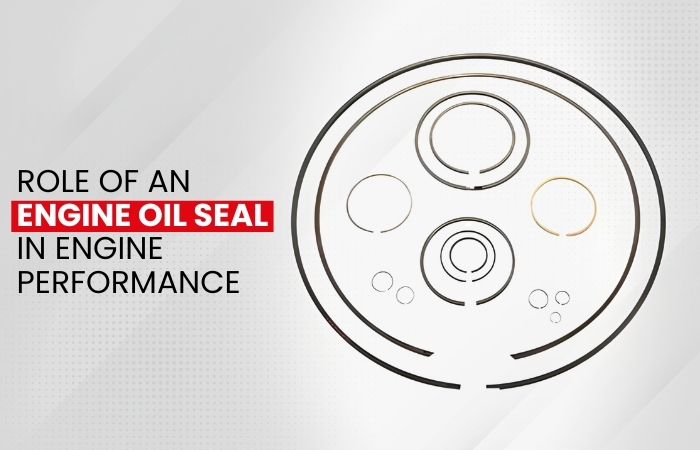
Engine oil seals play a crucial role in maintaining the engine’s performance. They are designed to seal the gap between stationary and rotating engine components, preventing engine oil from leaking while keeping dust, dirt, and other contaminants out.
Modern engines that operate under high temperatures and pressure require engine oil seals, such as piston rings, to ensure smooth operation, efficient lubrication, and longer engine life. Understanding how engine oil seals work and why they are important helps vehicle owners and industries maintain engine efficiency and avoid costly repairs.
What is an Engine Oil Seal?
The engine oil seals are a wide range of sealing devices used in various machines to prevent the leakage of sealed lubricant from inside and to prevent the entry of dust, water, and metal powder from outside.
These engine oil seals are made from materials like Buna, Silicon, EPDM, and Polyacrylate. These different types of materials are used for a variety of engines and machinery, providing significant benefits.
Functions of an Engine Oil Seal
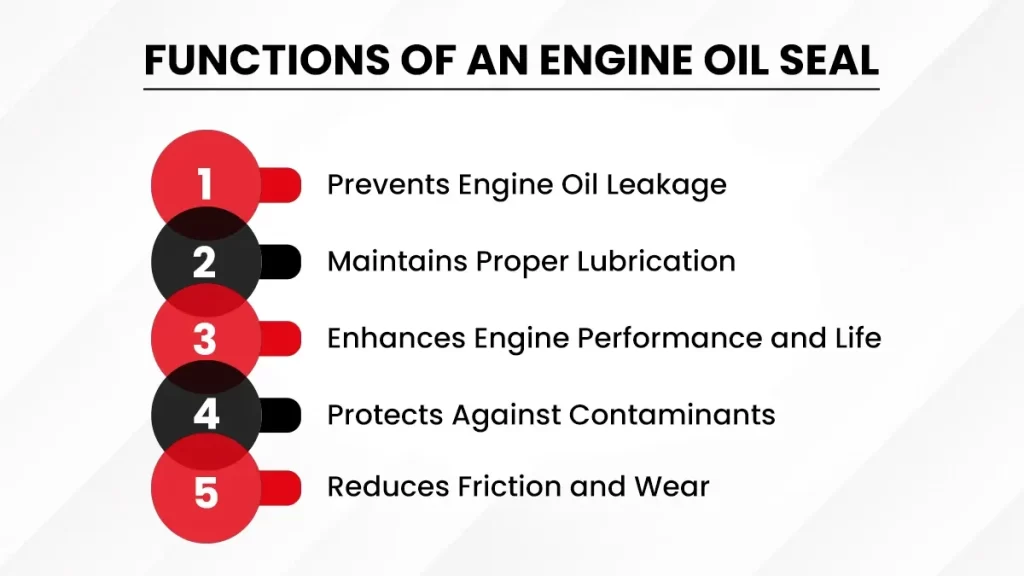
An engine oil seal performs several important functions that help maintain engine performance and durability. Here are some key functions of the engine oil seal:
1. Prevents Engine Oil Leakage
- The engine oil seal prevents oil from leaking out of critical parts such as the crankshaft and camshaft, maintaining proper oil levels and preventing oil loss during engine operation.
2. Maintains Proper Lubrication
- By sealing the oil inside the engine, the lubricant reduces the friction, allowing the engine to run smoothly and efficiently.
3. Enhances Engine Performance and Life
- Effective oil sealing supports stable engine performance by preventing oil loss and contamination. This results in better efficiency, lower maintenance needs, and a longer engine lifespan.
4. Protects Against Contaminants
- Oil seals act as a barrier against dust, dirt, and water from entering the engine, protecting internal components from damage and premature wear.
5. Reduces Friction and Wear
- Engine oil seals are designed to minimize friction between rotating shafts and stationary components, reducing the wear and tear of the engine and improving overall durability.
People Also Read: Why Does an Engine Oil Burn & How to Prevent?
Types of Engine Oil Seals
There are multiple types of engine oil seals, used for different purposes:
1. Radial Shaft Oil Seals
- Radial shaft oil seals are the most common type of engine oil seal. They seal rotating shafts like crankshafts and camshafts, preventing oil leakage while keeping dust and contaminants out.
2. Valve Stem Oil Seals
- Valve stem oil seals control the amount of oil that lubricates the valve stems, preventing excess oil from entering the combustion chamber and helping reduce oil consumption and exhaust smoke.
3. Camshaft Oil Seals
- Camshaft oil seals are used to seal the camshaft openings in the cylinder head, ensuring proper lubrication while preventing oil leakage during valve timing operations.
4. Crankshaft Oil Seals
- Crankshaft Oil Seals are used to seal crankshaft openings, maintaining oil pressure inside the engine, and preventing oil leaks caused by continuous shaft rotation.
5. Mechanical Oil Seals
- Mechanical oil seals are used in high-performance or heavy-duty engine applications. They provide enhanced sealing under extreme pressure, temperature, and rotational speeds.
People Also Read: Piston Ring Clearance
Importance of Engine Oil Seals in Engine Performance
By securely sealing rotating and stationary parts such as crankshafts, camshafts, and valve stems, engine oil seals ensure that engine oil remains where it is needed for proper lubrication, reducing friction between moving parts and allowing the engine to run smoothly and efficiently.
Properly functioning engine oil seals also help maintain correct oil pressure within the engine. When oil pressure is stable, internal components receive consistent lubrication and cooling, which minimizes wear and reduces the risk of overheating. By keeping the lubrication system clean, oil seals contribute to longer engine life, better fuel efficiency, and reduced maintenance costs.
Common Causes of Engine Oil Seal Failure
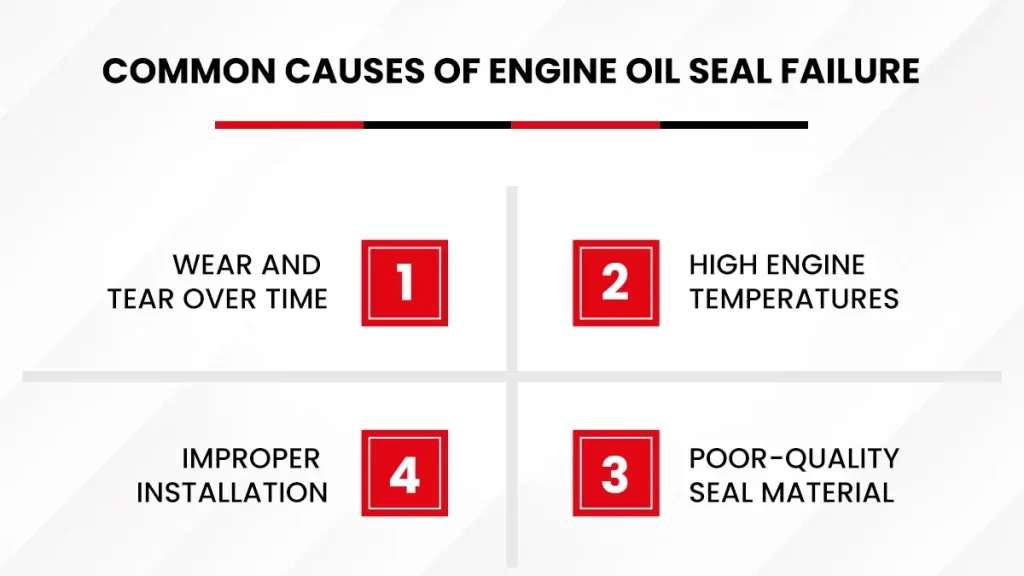
Here are some common causes of engine oil seal failure:
1. Wear and Tear Over Time
- These engine oil seals are exposed to heat, pressure, and friction. This continuous stress causes the seal material to harden, crack, or lose elasticity, leading to oil leakage.
2. High Engine Temperatures
- Excessive heat can degrade oil seal materials, especially rubber-based seals. Prolonged overheating causes seals to become brittle, reducing their ability to maintain a tight seal.
3. Poor-Quality Seal Material
- Low-quality or non-standard oil seals may not withstand engine operating conditions. Inferior materials can fail early, even under normal engine loads.
4. Improper Installation
- Improper Installation, such as misalignment or damage during fitting, can deform the oil seal, preventing proper sealing and leading to premature failure.
Why Choosing a Reliable Manufacturer Matters
Choosing a reliable manufacturer for engine oil seals is crucial for ensuring long-term engine performance and durability. Oil seals operate under extreme conditions like high temperatures, constant friction, and pressure variations. A trusted manufacturer follows strict quality standards and precision engineering practices, ensuring that each oil seal provides effective sealing, consistent performance, and resistance to wear over time.
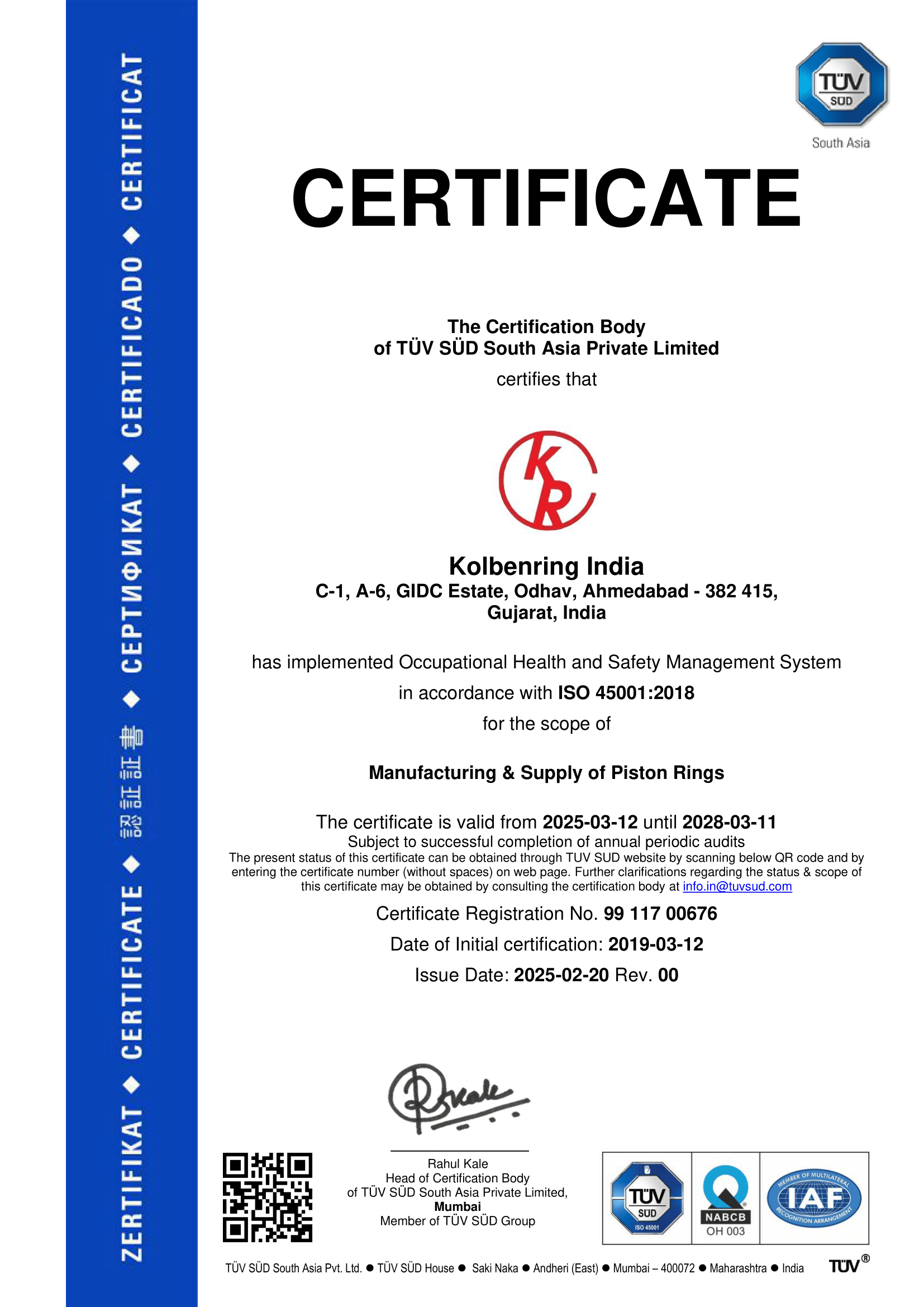
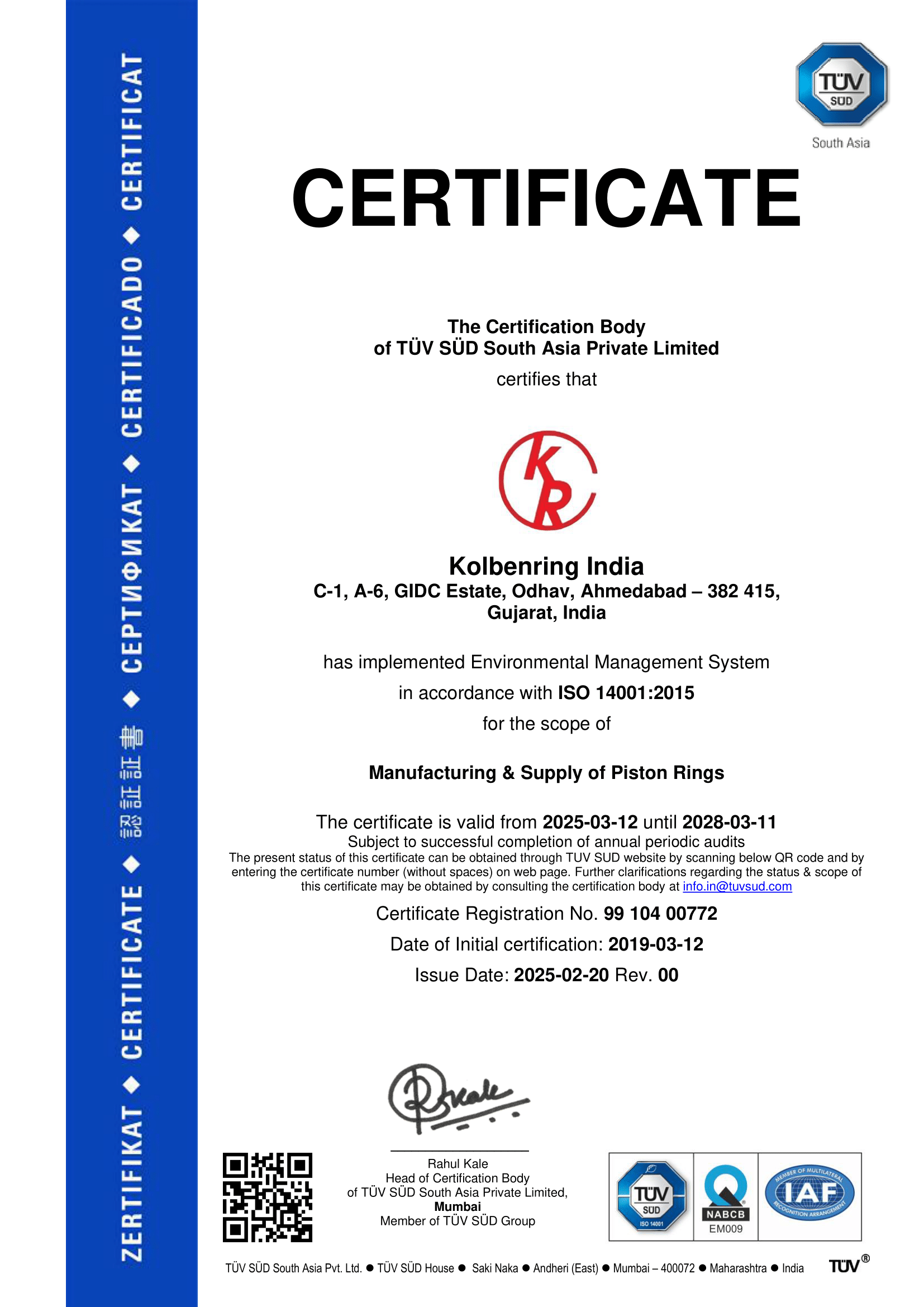
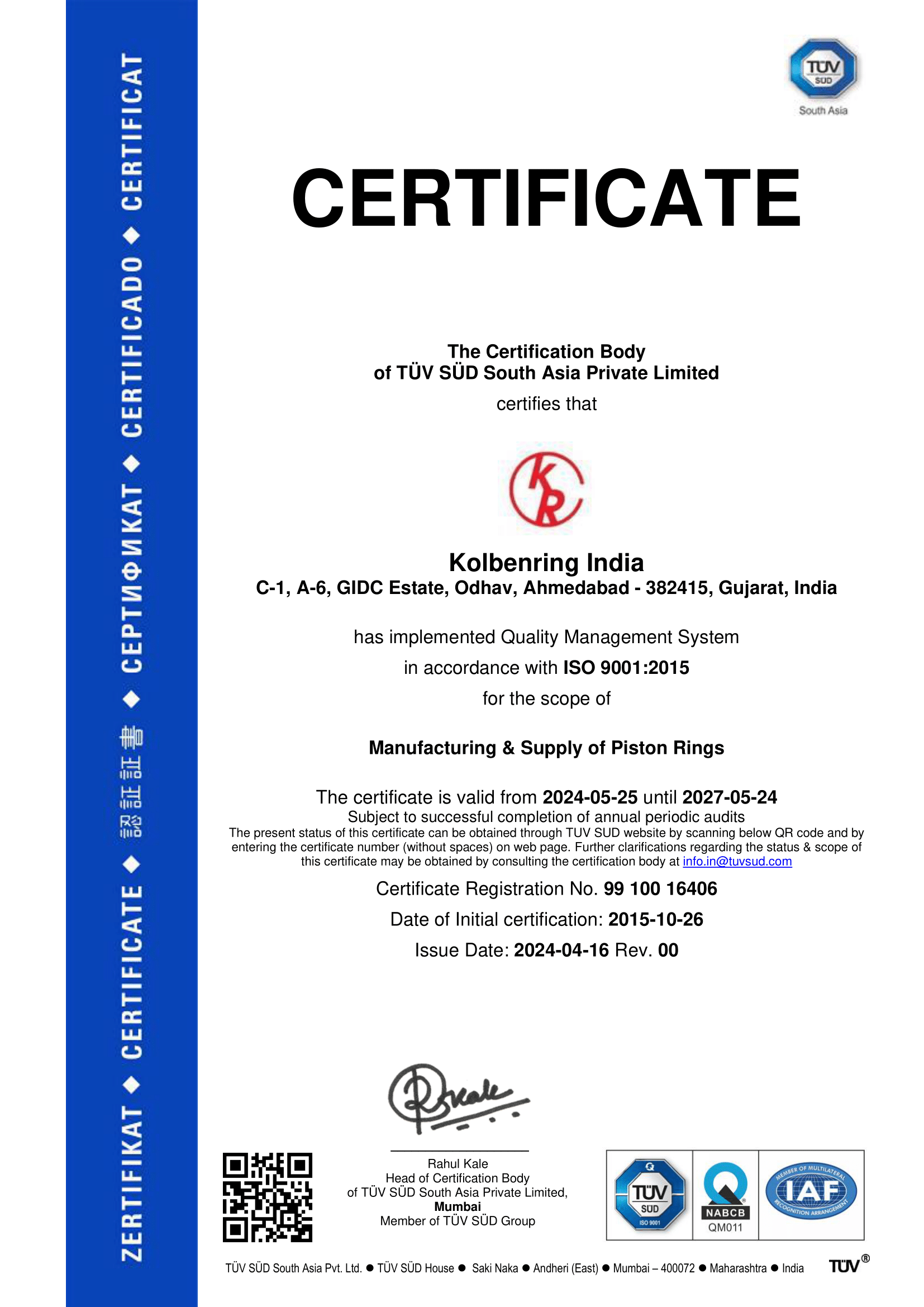
Brands like Kolbenring India, known for their OEM-level manufacturing and quality control processes, offer oil seals designed for accuracy, durability, and compatibility with engine applications. Choosing such a manufacturer not only improves engine reliability but also ensures peace of mind, knowing that the components are built to perform under demanding conditions.
Conclusion: The Need for Engine Oil Seals
Engine oil seals may be small components, but they play a critical role in keeping an engine efficient, reliable, and protected. By preventing oil leakage, maintaining proper lubrication, and blocking contaminants, oil seals help reduce friction, control wear, and support smooth engine operation under demanding conditions.
Understanding the types, functions, and common causes of oil seal failure highlights why timely maintenance and the use of high-quality seals is crucial. Choosing reliable, well-engineered engine oil seals from trusted manufacturers like Kolbenring India ensures durability, precise sealing, and consistent performance, helping avoid costly repairs and ensuring long-term engine reliability.
Looking for high-quality engine oil seals for your application? Get in touch with Kolbenring India today by filling out the Contact Us form on our website. Our experts will help you find the right sealing solution to meet your engine and performance requirements.
FAQs: Engine Oil Seal
1. What is an engine oil seal?
Ans: The engine oil seal is a component that seals the gap between the lubricants and prevents engine oil from leaking while keeping dust, dirt, and other contaminants out.
2. Can engine seals be replaced?
Ans: Yes, engine oil seals can be replaced if they are torn, have lost elasticity, or are of poor quality.