Compression Rings and Oil Rings: Pros, Cons, & Best Practices
Introduction
In vehicles, the most important part is the engine. The engine is like the brain of a car; it operates the vehicle. Piston rings play a vital part in the engine, ensuring smoothness, efficiency, and durability of the engine. Among these, there are two types of piston rings: the oil ring and the compression ring play distinct roles that are often misunderstood.
It is important to understand the difference between the compression rings and oil rings. Understanding their functions, advantages, and disadvantages, and best practices that help in improving the life of the engine and preventing costly repairs. In this blog, we’ll explore everything you need to know to choose the right piston ring for your application.
What is an Oil Ring?
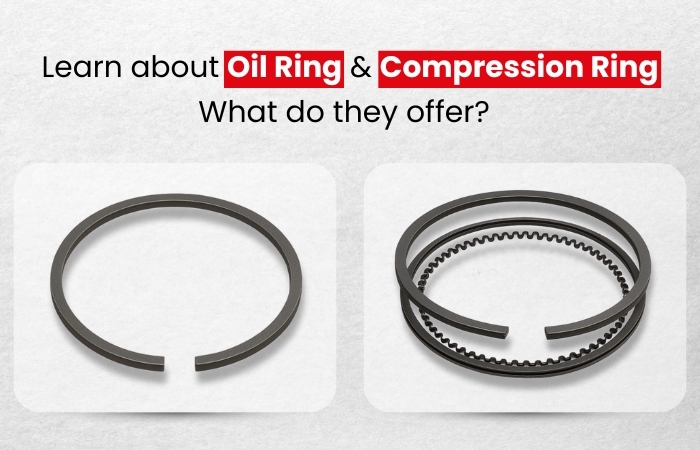
Oil rings are one of the most important parts of a combustion engine. It is made out of rubber and helps in sealing the combustion chamber of the engine.
The main function of an oil ring is to prevent the combustion pressure and combustion products in the cylinder from leaking to other parts of the engine by creating a seal between the piston and the cylinder. Close to the inner wall of the cylinder, the oil ring is located at the top of the piston ring group, forming a sealed space.
It is usually made from durable materials like alloy cast iron or pressed steel, often with hard chrome or other wear-resistant coatings to improve longevity, helping in controlling the flow of oil inside the engine and achieving a normal lubricating oil supply.
What is a Compression Ring?
A compression ring is a piston ring that effectively seals the compression pressure and leakage of the combustion gases.
These rings are located at the top groove of a piston ring, helping in sealing the combustion chamber to prevent gas from escaping. They also help in transferring heat from the piston rings to the cylinder wall. Compression rings are typically made from cast iron, often alloyed with elements like chromium or molybdenum for enhanced strength and wear resistance.
Oil Ring and Compression Ring: Key Differences
Both oil rings and compression rings serve different purposes:
| Feature | Oil Ring | Compression Ring |
| Primary Function | Controls and regulates engine oil by scraping excess oil off the cylinder wall. | Seals the combustion chamber to maintain compression and prevent gas leakage. |
| Position on Piston | Located in the lower groove of the piston. | Positioned in the top grooves of the piston. |
| Material Used | Usually made from steel or cast iron, often with slots or holes for oil drainage. | Made from hardened steel or cast iron, sometimes chrome or molybdenum-plated for durability. |
| Design & Structure | Typically, a multi-piece ring with grooves and slots to manage oil flow. | Usually a solid, single-piece ring with a smooth or slightly tapered edge. |
| Working Condition | Operates in an oil-rich environment for lubrication and cooling. | Exposed to high heat and pressure from combustion gases. |
| Main Role in Engine | Prevents oil from entering the combustion chamber and controls oil consumption. | Ensures proper sealing of gases for efficient combustion and power output. |
| Common Wear Issues | Can get clogged with carbon deposits or lose tension over time. | May develop wear or cracks due to extreme pressure and temperature. |
People Also Read: Between 2-Stroke and 4-Stroke Engine
Advantages & Disadvantages of Oil Rings
Advantages of Oil Rings
- Controls oil consumption: It scrapes all the excess oil from the cylinder walls, preventing it from entering the combustion chamber.
- Improves engine cleanliness: They prevent the carbon buildup and sludge formation by regulating oil flow.
- Reduces wear and tear: It maintains proper lubrication to minimise friction between the piston and cylinder wall.
Disadvantages of Oil Rings
- Can clog over time: The carbon deposits may block the oil holes, which reduces the effectiveness of an engine.
- Limited high-pressure resistance: They are not designed to handle combustion pressure.
- Requires proper maintenance: The irregular oil changes or poor-quality oil can lead to faster wear in the oil rings.
Advantages & Disadvantages of Compression Rings
Advantages of Compression Rings
- Boosts fuel efficiency: By preventing gas leakage, compression rings improve overall engine performance.
- Durable under pressure: Compression Rings are made from strong materials like hardened steel or cast iron to withstand high temperatures and pressures.
- Maintains combustion pressure: They help create a tight seal in the combustion chamber to generate efficient power.
Disadvantages of Compression Rings
- Higher replacement cost: Generally more expensive to replace than oil rings.
- Improper installation risks: If not fitted correctly, it can lead to compression loss or engine knocking.
- Prone to wear and cracking: Constant exposure to heat and combustion pressure can cause gradual damage.
People Also Read: Difference Between Piston Ring and Rider Ring
Best Practices for Using Oil and Compression Rings
1. Use High-Quality Rings
Choose OEM-approved or high-grade piston rings from trusted manufacturers like Kolbenring India. Poor-quality rings wear out faster and can cause oil leaks or compression loss.
2. Ensure Proper Installation
One of the main causes of ring failure is incorrect installation. Use these steps to install the rings properly:
- Align ring gaps correctly.
- Check groove clearance and fit.
- Follow the engine manufacturer’s torque and alignment specifications.
3. Maintain Clean Engine Oil
Using clean and high-quality engine oil prevents sludge, carbon buildup, and ring sticking. Regular oil changes are crucial for keeping the oil rings clean and effective.
4. Avoid Overheating
Maintain proper cooling levels and monitor engine temperature regularly to prevent engine overheating, which can cause ring distortion or cracking.
5. Follow Break-In Procedures
When installing new rings, following the proper engine break-in process is very important, as it helps the rings seat properly against the cylinder wall and ensures optimal sealing.
6. Inspect Regularly
During servicing, check for signs of wear, scoring, or carbon deposits. Early detection can save the engine from major damage or performance loss.
People Also Read: How does the Installation of Piston Rings Work?
Conclusion: Oil Ring and Compression Ring
Both oil rings and compression rings help maintain the performance, efficiency, and life of an engine. While oil rings control lubrication and prevent oil from entering the combustion chamber, compression rings ensure proper sealing and pressure within the combustion area. Together, they work as a team to help the engine live long.
While having an oil ring and a compression ring in your engine is necessary, it is also necessary to choose the correct manufacturer to buy from, leading to significantly improved engine performance and longevity.
Kolbenring India, a trusted manufacturer of piston rings and precision-engineered components, offers durable and high-performance solutions for automotive and industrial applications. Explore Kolbenring’s range today!
FAQs: Oil Ring and Compression Ring
1. What is the difference between an oil ring and a compression ring?
Ans- The Oil ring helps to wipe the excess oil from the engine, while the Compression ring helps in wiping the excess gas from the engine.
2. What are the three types of compression rings?
Ans- The three types of compression rings are:
- Rectangular compression ring
- Taper-faced compression ring
- Internally bevelled compression ring
3. What is the purpose of a compression ring?
Ans- The main purpose of compression rings is to prevent leakage of the combustion gases.
4. How many oil rings do pistons have?
Ans- Pistons have only one oil ring and two compression rings in a piston.