Introduction to Piston Rings
Every year, more than 2 million cars are sold in India, and every one of those cars has an engine. The engine is the most important part of the car, as no car can run without it.
Every engine has many parts, like the valve spring, the gasket, the piston, and many more. All of these parts are important for the engine to function properly, and one of the most important parts is the piston ring, which helps the piston in the engine to operate.
Now, if you are a car manufacturer, then you would know that most cars have 3 piston rings, but do you know the functions of each ring, the advantages, and engine performance impact.
In this blog, we will talk about the importance of the 3 piston rings in an engine, their functions, advantages, and the impact they make on the engine’s performance.
What Are Piston Rings?
Piston rings are metallic split rings that are between grooves on the outer diameter of a piston in an internal combustion engine or steam engine. These rings help in controlling combustion and oil and transferring heat away from the piston to the cylinder wall.
Piston rings are commonly made with cast iron, steel, or alloyed with chromium. These materials help the ring support the engine by not letting it burn off.
The Three Piston Rings and Their Functions
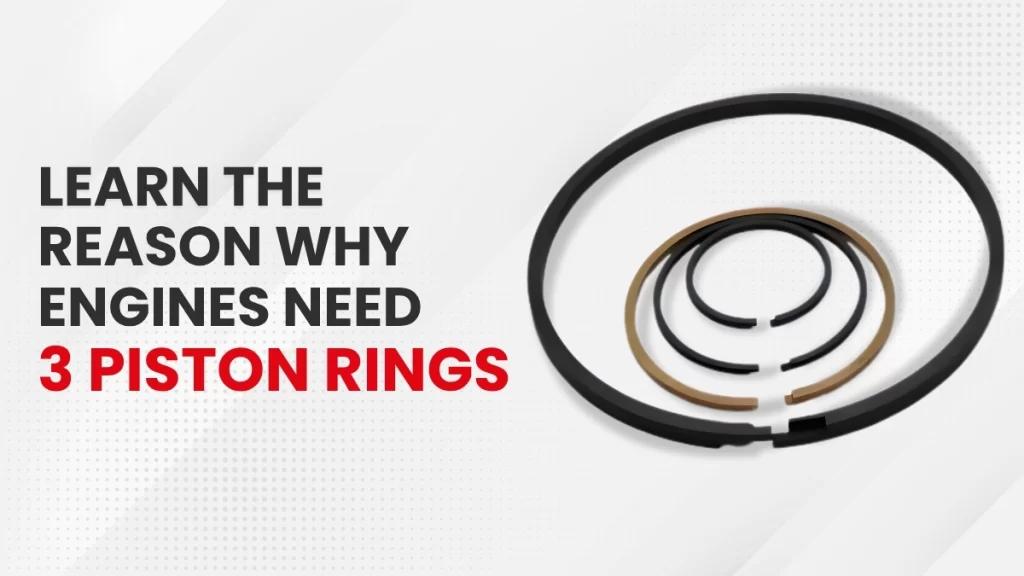
Every engine has 3 types of piston rings, each designed with a specific role to ensure smooth operation, proper sealing, and efficient combustion. These are the top compression ring, the second compression ring, and the oil control ring.
1. Top Compression Ring
The top compression ring is the uppermost ring in a piston ring on a piston. It is responsible for sealing the combustion chamber and transferring the heat to the cylinder wall.
2. Second Compression Ring
The second compression ring is also known as the scraper ring. The main function of this ring is to back up the top ring. It also helps in reducing the gas blow-by and assists in oil control.
3. Oil Control Ring
The oil control ring is located at the bottom of the piston ring assembly. The main function of an oil control ring is to prevent the combustion pressure in the cylinder from leaking to other parts of the engine by creating a seal between the piston and the cylinder.
Why Engines Specifically Need 3 Piston Rings
Engines are a crucial part of the car, which is why three piston rings are designed to maintain a perfect balance between compression, oil control, and heat transfer. Here’s why engines need all three:
1. To Maintain Proper Compression
To ensure that all the energy from combustion is used to power the piston, the top and second compression rings seal the combustion chamber, preventing gases from leaking into the crankcase.
2. Control Oil Consumption
The oil ring at the bottom regulates the amount of oil on the cylinder wall. It pushes away the excess oil and redistributes it evenly, preventing it from entering the combustion chamber, helping in maintaining clean combustion and reducing smoke emissions.
3. Reduce Wear and Extend Engine Life
By preventing gas leakage, piston rings minimize friction between the piston and the cylinder wall, leading to an increase in the engine’s life and a reduction in maintenance costs.
People Also Read: Piston Ring Clearance
Advantages of Having 3 Piston Rings
Here are the advantages of having 3 piston rings in an engine:
1. Improved Engine Efficiency
To ensure the engine burns fuel efficiently and delivers maximum power output, oil rings help maintain proper sealing and combustion pressure.
2. Better Heat Management
Piston rings transfer heat from the piston to the cylinder wall, keeping the engine cool and preventing overheating.
3. Lower Maintenance Costs
Proper sealing and lubrication reduce the chances of engine damage or oil burning, which means fewer repairs and lower long-term maintenance costs.
Conclusion to the Reason Why Engines Need 3 Piston Rings
The three piston rings, the top compression ring, the second compression ring, and the oil control ring play an essential role in the smooth functioning of every engine. Each ring performs a unique task, from sealing combustion gases and maintaining compression to controlling oil flow and managing heat. Together, they ensure the engine runs efficiently, stays durable, and delivers consistent performance.
Understanding the purpose and advantages of these piston rings helps maintain engine health, improve fuel efficiency, and reduce repair costs.
If you’re looking for high-quality, precision-engineered piston rings or seal rings, Kolbenring India is a trusted manufacturer known for reliability, innovation, and superior performance. Contact Kolbenring today to learn more or get expert guidance for your engine requirements.
FAQs
1. What is the purpose of three piston rings?
Ans- The purpose of three piston rings in an engine is to seal off the internal combustion and transfer the heat to the cylinder wall.
2. Why do pistons have multiple rings?
Ans- Most pistons have 3 rings: two compression rings and one oil ring. These rings help transfer the heat from the combustion chamber to the cylinder wall.
3. How many rings should a piston have?
Ans- Mostly pistons have three rings, two known as compression rings and an oil ring.
4. What does the 2nd piston ring do?
Ans- The 2nd piston ring helps the top ring to transfer the heat from the combustion chamber to the cylinder wall, and it also helps in reducing the gas blow-by and assists in oil control.
5. What happens if piston rings are installed upside down?
Ans- Installing the piston rings can significantly degrade oil control and engine performance, which is why it is important to install the piston rings correctly.