Introduction: Understanding Engine Oil Seal Leakage
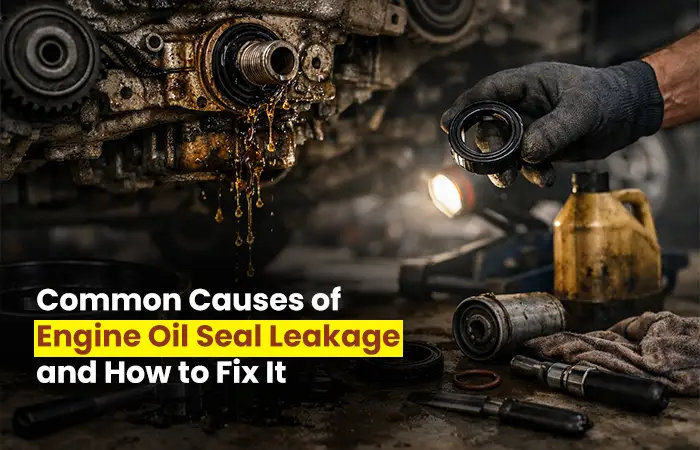
Have you ever noticed a small but dark pool of liquid under your car when you drive it out of the parking lot? This dark pool is the oil that leaked out. Leaked oil mainly indicates that the engine oil seal is not working properly or has become rusted.
It is a big expense for anyone, as it also affects the engine, which is why proper care and maintenance of the oil seal is very important. In this blog, we will let you know about some signs to look out for, the causes for engine seal leaks, and how to prevent the oil from leaking.
What is an Engine Oil Seal?
Engine oil seals, also known as piston rings, are mechanical components designed to prevent lubricating oil and grease from escaping along rotating shafts, such as in engines, gearboxes, and transmissions.
These oil seals are used in the crankshaft, camshaft, and valve stems, and they ensure that engine oil remains contained within the system while blocking the passage of dust, dirt, and moisture from entering.
These are made from durable materials like rubber, silicone, or advanced polymers, often reinforced with a metal casing for strength. Engine oil seals are designed to withstand high temperatures, pressure, and constant friction, ensuring proper lubrication, reduced wear, and smooth engine operation.
Main Causes of Engine Oil Seal Leakage
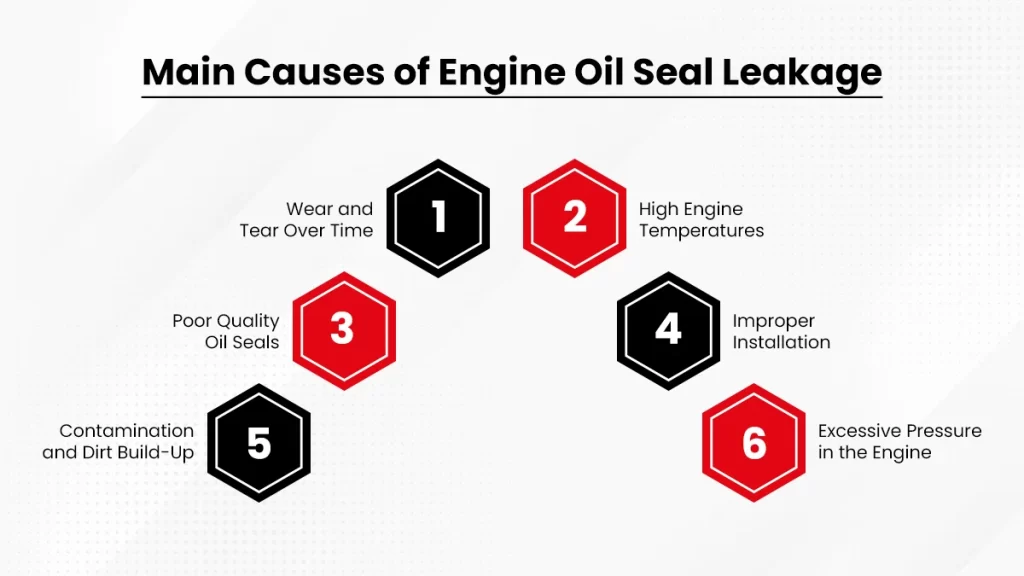
As mentioned above, engine oil seals are designed to prevent lubricating oil and grease from escaping along rotating shafts. But sometimes the engine oil seal can start leaking. Here are the main causes of the engine oil leaks:
- Wear and Tear Over Time
Engine oil seals are daily exposed to constant friction, heat, and pressure. Over time, the sealing material can harden, crack, or lose flexibility, leading to oil leakage.
- High Engine Temperatures
Excessive heat can damage seal material, especially in rubber-based seals. Continuous exposure to heat melts it, making it less effective in maintaining a tight seal.
- Poor Quality Oil Seals
Buying oil seals from low-grade manufacturers may not withstand harsh engine conditions. They tend to wear out faster and fail prematurely, causing leakage issues.
- Improper Installation
Missalignment, incorrect fitting, or damage during installation can deform the ring, preventing proper contact with the shaft, resulting in oil leakage.
- Contamination and Dirt Build-Up
Dust, debris, or metal particles can damage the sealing surface. Contaminants create gaps or unevenly wear the seal, leading to leakage over time.
- Excessive Pressure in the Engine
High internal pressure can force oil past the seal, especially if the seal is already weak or worn. This is common in poorly maintained engines.
How to Fix Engine Oil Seal Leakage
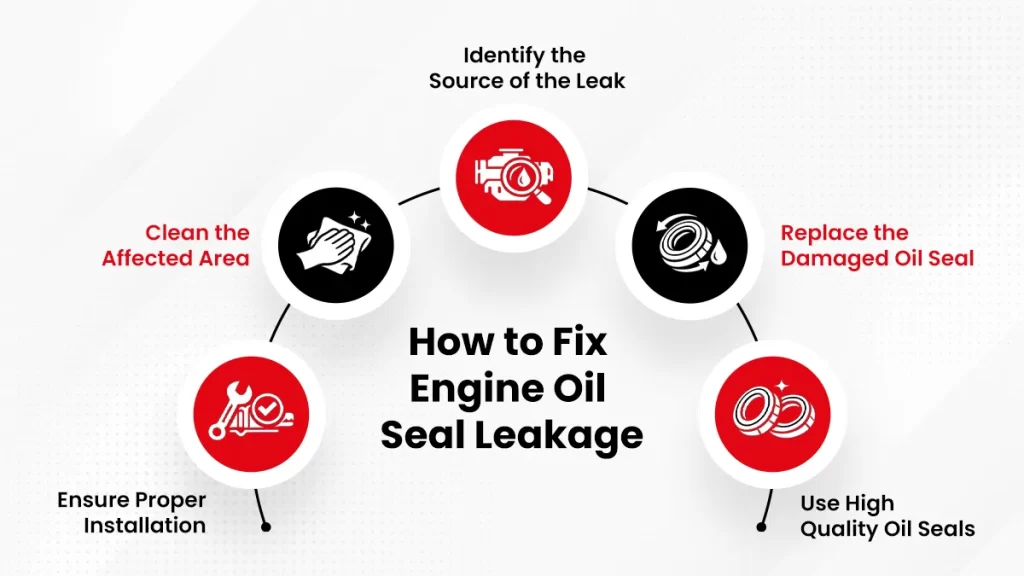
To tackle the challenges mentioned above. Here are some solutions to fix engine oil seal leakage:
- Identify the Source of the Leak
Inspecting the source of the leak will help identify the exact cause. Check areas around the crankshaft, camshaft, and valve covers to confirm which oil seal is damaged.
- Clean the Affected Area
Before making any repairs, clean the surrounding area to remove oil, dirt, and debris. This helps in accurate diagnosis and ensures proper installation of the new seal.
- Replace the Damaged Oil Seal
If the seal is damaged while installing, or it is worn out or cracked due to high heat or pressure. Carefully remove the old seal and install a new one that matches the engine specifications.
- Ensure Proper Installation
Use the correct tools and techniques to install the new oil seal. Proper alignment and fitting are crucial to prevent future leakage and ensure a tight seal.
- Use High-Quality Oil Seals
Always choose high-quality, precision-engineered oil seals for better durability and performance. Reliable components help reduce the chances of repeated leakage issues. Choose manufacturers like Kolbenring India to elevate the quality of your car’s oil seal rings.
Prevent Future Engine Oil Seal Leakage
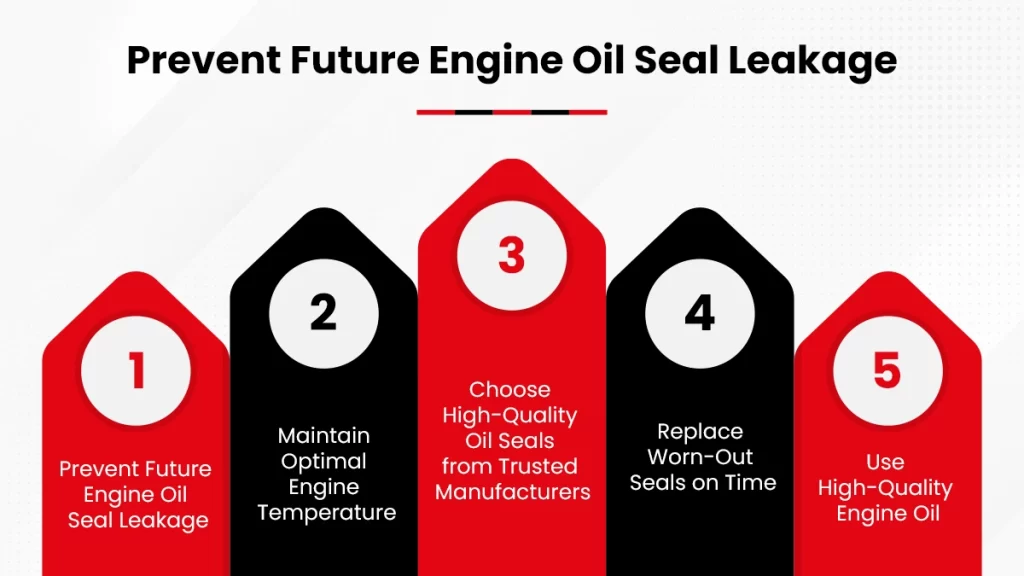
Preventing engine oil seal leakage is essential for maintaining engine efficiency and avoiding costly repairs. Here are some practical tips to help extend the life of your oil seals:
- Follow Regular Engine Maintenance
Engine service every 2-3 months helps identify early signs of wear and tear in the oil seal. Regular inspections ensure that minor issues are fixed before they turn into major leaks.
- Maintain Optimal Engine Temperature
Excessive heat can burn engine oil and damage oil seal materials. Ensure the cooling system is functioning properly to prevent overheating and prolong seal life.
- Choose High-Quality Oil Seals from Trusted Manufacturers
Manufacturers like Kolbenring India are trusted manufacturers with quality control certificates. They make precision-engineered oil seals from durable materials, ensuring better resistance to heat, pressure, and wear, reducing the chances of leakage over time.
- Replace Worn-Out Seals on Time
Do not delay replacing old or damaged oil seals. Timely replacement prevents oil leakage and protects other engine components from damage.
- Use High-Quality Engine Oil
Good-quality lubricants reduce friction and prevent excessive wear on seals. Using the right grade of engine oil also helps maintain proper sealing performance.
Conclusion: Protecting Your Engine from Oil Seal Leakage
Engine oil seal leakage may seem like a small issue at first, but if ignored, it can lead to serious engine damage, reduced performance, and costly repairs. By understanding the causes, identifying early signs, and taking timely corrective actions, you can effectively prevent long-term problems and keep your engine running smoothly.
Regular maintenance, proper installation, and the use of high-quality components play a crucial role in extending the life of your oil seals. Choosing reliable manufacturers like Kolbenring India ensures durability, precision, and consistent performance under demanding conditions.
Looking for high-quality engine oil seals you can trust? Get in touch with Kolbenring India today and ensure superior sealing solutions for long-lasting engine performance.
FAQs: Fix Engine Oil Seal Leakage
- How do I know if my oil seal is leaking?
Ans: Signs that there could be a leak include a burning smell, the engine running louder than usual, or the engine making clicking or grinding noises.
- How do you fix a leaking oil seal?
Ans: Here are 5 steps to fix a leaking oil seal:
- Identify the Source of the Leak
- Clean the Affected Area
- Replace the Damaged Oil Seal
- Ensure Proper Installation
- Use High-Quality Oil Seals
- Can you drive with a leaking oil seal?
Ans: Yes, you can drive with a leaking oil seal, but only within a short distance if the leak is minor and your oil level is safe; however, doing the same for long-term isn’t recommended.
- What happens if I ignore an oil leak?
Ans: Ignoring an oil leak can lead to engine damage, safety hazards, environmental harm, and costly repairs.