Introduction: Why Piston Rings Matter
Piston rings are a crucial part of the engine. They help the engine seal the combustion chamber by preventing gases from leaking into the crankcase, preserving cylinder pressure, and boosting engine efficiency.
It is a major issue if it fails because it helps prevent gases from leaking into the crankcase and preserve cylinder pressure; if not done correctly, it can lead to engine failure or combustion, which is why it is important to understand the causes of piston ring failure and how to prevent it.
What Are Piston Rings and Why Are They Important?
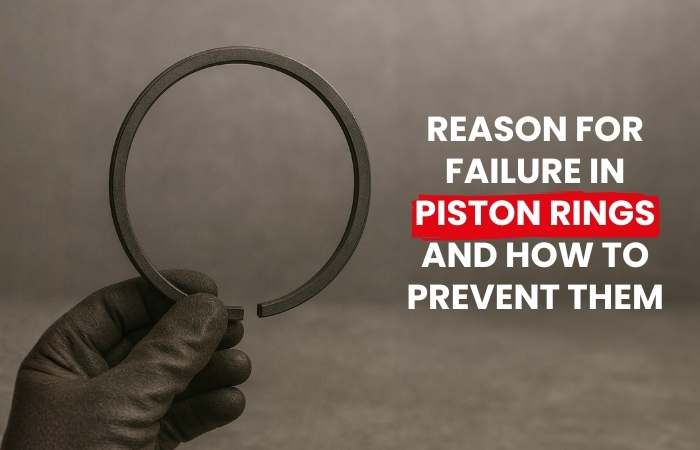
A piston ring is a metallic split ring between the grooves on the outer diameter of a piston in an internal combustion engine or steam engine. It helps seal the combustion chamber by preventing gases from leaking into the crankcase and preserving cylinder pressure, and boosting engine efficiency.
Piston rings are used in engines, reciprocating compressors, and hydraulic/pneumatic cylinders, primarily to seal the combustion chamber, control oil, and transfer heat between the piston and cylinder wall for optimal power, efficiency, and lubrication.
Signs of Piston Ring Failure
Here are the most common signs that indicate your piston rings may be worn out or damaged:
1. Excessive Exhaust Smoke
- If the exhaust starts blowing excessive, thick grey smoke, it means engine oil is leaking into the combustion chamber due to worn piston rings.
2. High Oil Consumption
- If your vehicle is consuming more oil than its average consumption, it can be a major warning sign of damaged rings that allow oil to slip past the piston, causing rapid oil burn.
3. Low Engine Compression
- If your engine is causing problems, like having a rough time getting started, reduced power, or poor throttle response, this can be an indication of worn piston rings.
4. Loss of Engine Power
- You may notice the vehicle struggling to accelerate, especially on inclines. This happens because combustion pressure is leaking past the rings.
5. Overheating Issues
- If your machine with a piston ring often heats up, it can also indicate damaged piston rings, as increased friction between the piston and cylinder wall leads to engine overheating and faster wear.
People Also Read: Piston Ring Clearance
Common Causes of Piston Ring Failure
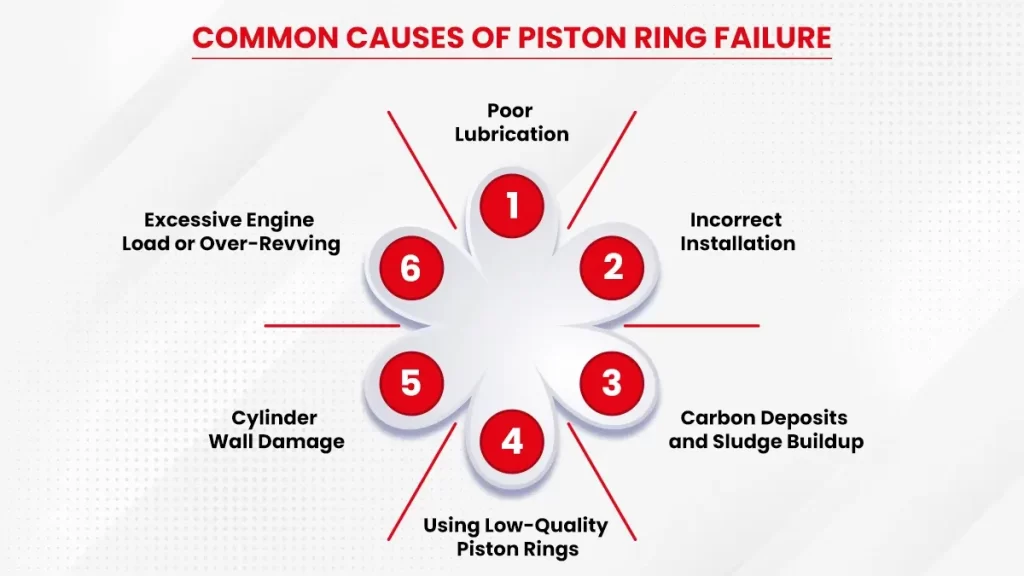
Here are some common causes for piston ring failure:
1. Poor Lubrication
- Using low-quality or insufficient engine oil is one of the reasons for piston ring failure. Without proper lubrication:
- Rings overheat
- Friction increases
- Wear happens faster
- Dirty or old oil also allows sludge to form, causing the rings to stick.
2. Incorrect Installation
- If piston rings are not installed properly, they fail early. Common installation mistakes include:
- Wrong ring orientation
- Incorrect ring gap
- Improper groove clearance
- Misaligned ring ends
3. Carbon Deposits and Sludge Buildup
- Incomplete combustion or dirty engine oil can cause carbon to build up around the piston rings. This leads to:
- Ring sticking
- Poor sealing
- Increased wear
4. Using Low-Quality Piston Rings
- Cheap or poor-quality piston rings cannot withstand high temperatures and pressure. They wear out quickly and cause oil burning, low compression, and engine knocking.
5. Cylinder Wall Damage
- Blow-by, oil leakage, and rapid ring wear can happen if the cylinder walls are scratched, worn, or uneven, as piston rings won’t create a tight seal.
6. Excessive Engine Load or Over-Revving
- Pushing the engine too hard, too often, increases stress on the rings; continuous high RPMs cause overheating, blow-by, and accelerated wear.
People Also Read: Piston Ring and Rider Ring
How to Prevent Piston Ring Failure
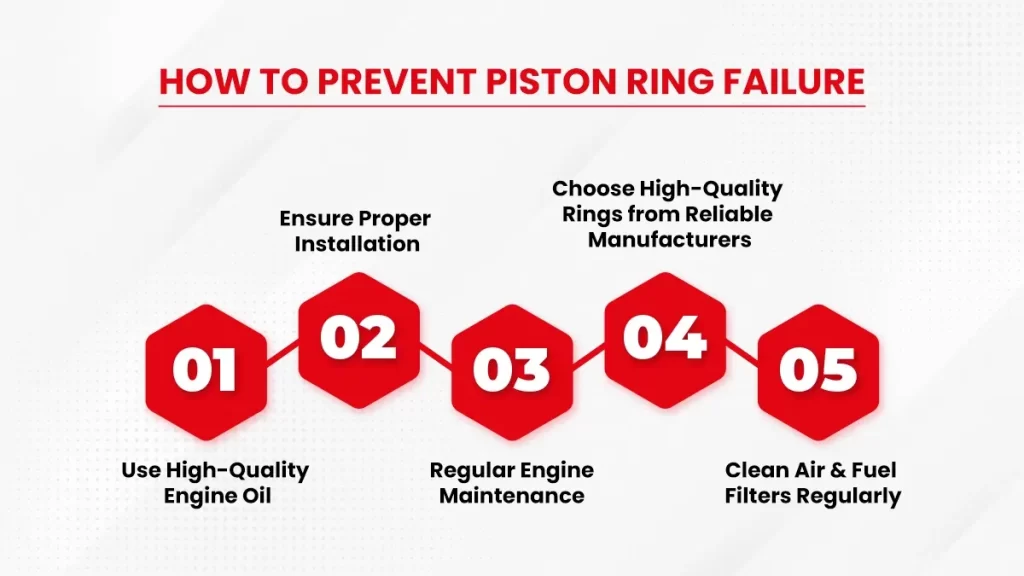
Below are the most effective ways to prevent piston ring failure and improve the overall life of your engine:
1. Use High-Quality Engine Oil
- Using low-quality or incorrect oil for your engine leads to excessive friction, carbon buildup, and overheating, all of which accelerate wear. As engine oil is the first line of defense for your piston rings, it is important to use a high-quality engine oil.
2. Ensure Proper Installation
- Incorrect installation is one of the biggest causes of early piston ring failure, which is why it is important to ensure proper installation, as incorrect installation, like misaligned ring gaps, improper torque, or wrong ring orientation, can damage both the rings and the cylinder walls.
3. Regular Engine Maintenance
- Routine maintenance ensures the engine works smoothly and prevents long-term damage.
Key maintenance tasks include:
- Timely oil and filter changes
- Spark plug inspection
- Checking for blow-by or smoke
- Compression or leak-down tests to detect early ring wear
4. Choose High-Quality Rings from Reliable Manufacturers
- Low-grade or poorly manufactured rings wear out faster and lose tension quickly. Choosing premium-quality rings from trusted manufacturers ensures:
- Better wear resistance
- Accurate ring dimensions
- Proper sealing
- Enhanced heat and corrosion resistance
5. Clean Air & Fuel Filters Regularly
- Dirty filters allow dust, dirt, and contaminants to enter the combustion chamber. These abrasive particles scratch the cylinder walls and rings, leading to premature failure.
People Also Read: What are the Spare Parts of a Cone Crusher?
When Should You Replace Piston Rings?
Knowing when to replace a piston ring helps prevent costly engine damage. Here are the key situations when piston rings should be replaced:
1. When Oil Consumption Increases Abnormally
If you find yourself topping up engine oil more often despite no visible leaks, worn piston rings may be allowing oil to enter the combustion chamber.
2. When the Engine Loses Compression
Reduced compression causes difficulty starting, low power, poor mileage, and weak acceleration. A compression or leak-down test usually confirms ring wear.
3. When the Engine Feels Weak or Underpowered
If your engine struggles to accelerate or feels sluggish, worn rings may be failing to seal the combustion chamber properly.
Why Choosing the Right Manufacturer Matters
Selecting the right manufacturer is crucial because piston rings require precision engineering to fit perfectly in the piston groove and maintain an airtight seal. Even the slightest manufacturing error can lead to blow-by, oil leakage, and reduced engine efficiency. A reliable manufacturer also uses high-grade materials that can withstand extreme heat, pressure, and friction without wearing out quickly. This ensures longer engine life, better performance, and fewer maintenance issues.
Kolbenring India, known for its world-class production standards and OEM-approved components, is one of the most trusted piston ring manufacturers. Their advanced technology, strict quality control, and durable materials make them a preferred choice for automotive, industrial, and heavy-duty engine applications.
Conclusion
Piston rings play a major role in maintaining compression, controlling oil, and ensuring smooth engine performance. When they fail, the entire engine is at risk, from loss of power and overheating to expensive repairs and complete breakdowns. By understanding the common causes of piston ring failure and following the right steps, you can significantly extend engine life, reduce maintenance costs, and keep your vehicle or machinery performing at its best.
Choosing the right piston ring manufacturer also makes a major difference. Precision engineering, high-grade materials, and strict quality control determine how long your piston rings will last and how well they will perform under extreme conditions.
If you’re looking for reliable, durable, and OEM-standard piston rings, Kolbenring India is a trusted name worldwide. With decades of expertise and advanced manufacturing technology, Kolbenring ensures unmatched quality for automotive, industrial, and heavy-duty applications.
For inquiries, technical support, or premium-grade piston ring solutions, contact Kolbenring India today and get components you can truly rely on.
FAQs
1. Why do piston rings fail?
Ans: Piston rings commonly fail due to poor lubrication, incorrect installation, using low-quality piston rings, carbon deposits, sludge buildup, cylinder wall damage, and excessive engine load or over-revving.
2. What is the lifespan of piston rings?
Ans: The lifespan of a piston ring ranges from 160,000 to 240,000 km.
3. Can overheating damage piston rings?
Ans: Yes, overheating can damage piston rings by causing expansion.
4. Do piston rings affect fuel economy?
Ans: Yes, the quality of a piston ring does affect the fuel economy, which is why it is important to get high-quality piston rings from trusted manufacturers like Kolbenring India.
5. Can piston rings be replaced without removing the engine?
Ans: Yes, piston rings can be replaced without removing the engine. You must remove the cylinder head and oil pan and disconnect connecting rods to push pistons up and out, then clean cylinders and install new rings carefully.