Common Reasons for Engine Overheating and Their Fixes
Introduction: Why Engine Overheating Should Not Be Ignored?
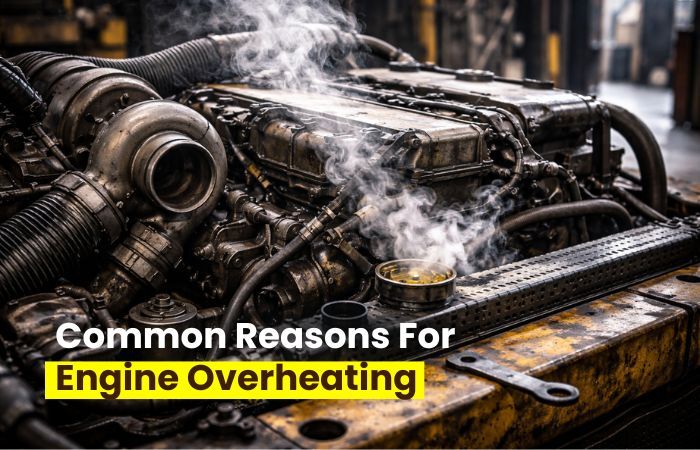
If you drive daily, you must have noticed smoke coming from your engine, which can be quite disappointing. As you know, this smoke indicates issues with the cooling mechanism. This engine overheating issue can affect the vehicle’s functions and performance.
Driving with an overheating engine can reduce efficiency and cause serious internal damage, which is why it is important to understand the signs and causes of an overheating engine and how to fix it.
What is Engine Overheating?
Engine overheating occurs when the engine exceeds its normal temperature, which typically happens due to overuse or a need for service. Every engine is designed to perform within a certain time period and specific temperature range, maintained by the cooling system and proper lubrication. When this balance is disturbed, the engine starts to overheat.
If ignored, engine overheating can cause issues like warped components, gasket failure, or complete engine breakdown. That is why it is important to understand the causes of overheating and the preventive measures that can be taken to ensure smooth and reliable engine operation.
Common Signs of Engine Overheating
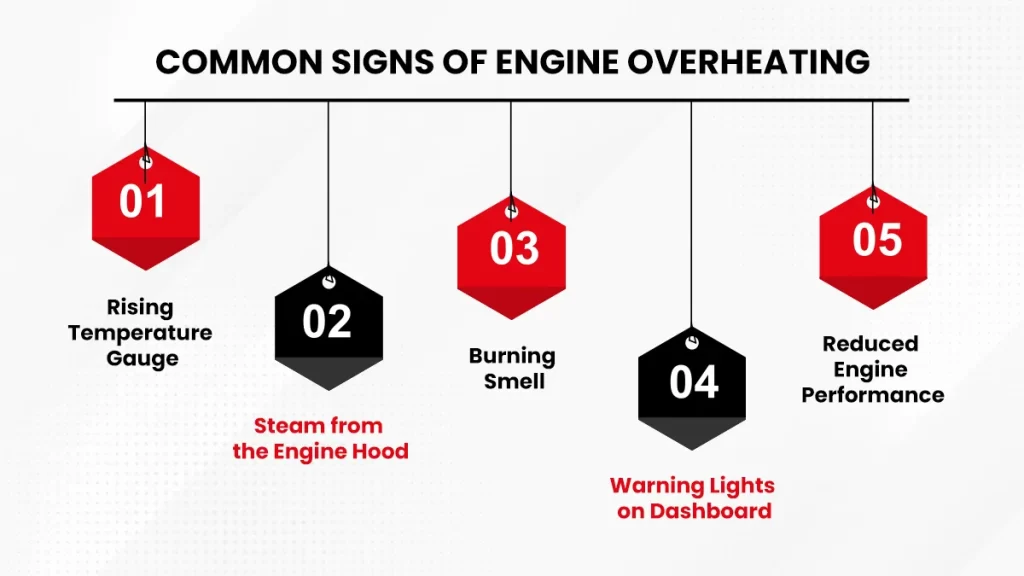
Here are some signs to identify the cause of engine overheating:
1. Rising Temperature Gauge
The first sign that most drivers see is the gauge moving to the red zone due to overheating. This shows that the engine is above its normal temperature.
2. Smoke from the Engine Hood
If you notice any blue or grey smoke coming from the hood, it usually means the coolant is boiling due to excessive heat.
3. Burning Smell
A strong burning smell from the engine can indicate overheating components, leaking coolant, or oil burning due to high temperature or overworking.
4. Reduced Engine Performance
Loss of power, struggling to accelerate, or running roughly are also some symptoms of an overheating engine.
5. Warning Lights on Dashboard
Modern vehicles often display a temperature warning light or “check engine” light when overheating occurs, alerting you to take immediate action.
People Also Read: Piston ring clearance
Common Reasons for Engine Overheating
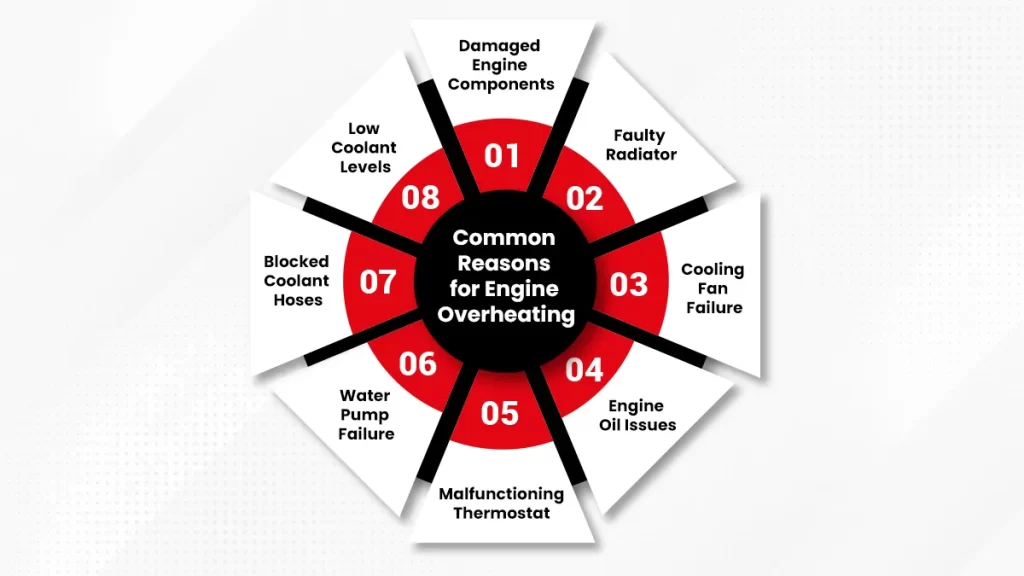
After knowing the signs, here are some causes that you should know about engine overheating:
1. Damaged Engine Components
Worn-out components, including piston rings or oil seals, can increase friction and reduce efficiency, indirectly contributing to overheating.
2. Faulty Radiator
If the radiator is damaged, it can not effectively release heat from the coolant, reducing its efficiency and causing heat to build up inside the engine.
3. Cooling Fan Failure
Cooling fans help lower engine temperature, especially during low-speed driving or idling. If the fan is not working properly, heat is not dissipated efficiently.
4. Engine Oil Issues
Engine oil reduces the friction between moving parts. Low oil levels or poor-quality oil increase friction, generating excess heat and contributing to overheating.
5. Malfunctioning Thermostat
The thermostat is like a liver that controls the flow of the coolant, so if it starts malfunctioning, the flow will get disrupted, and it will restrict the coolant from efficiently cooling the engine.
6. Water Pump Failure
If the water pump fails or becomes inefficient, coolant flow is disrupted, leading to overheating.
7. Blocked Coolant Hoses
Dirt, debris, or sludge buildup in hoses can restrict coolant flow. This blockage prevents proper cooling and increases engine temperature.
8. Low Coolant Levels
Coolant is an important component of the engine that absorbs heat and helps the engine stay cool. If the coolant is damaged or starts leaking due to a lack of maintenance, the engine will start to overheat.
People Also Read: Why Piston Rings Fail: Common Causes & How to Prevent Them
How to Fix Engine Overheating
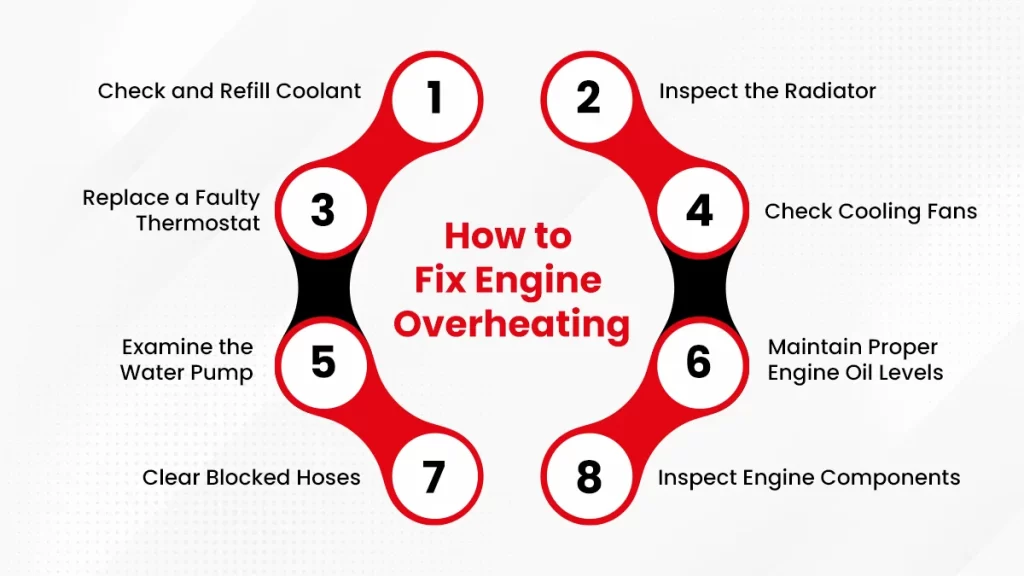
Fixing engine overheating requires identifying the root cause and taking corrective measures to restore proper cooling and engine performance.
1. Check and Refill Coolant
Start by checking the coolant. Look out for any leaks or check if it is low. If it is low, refill it with the recommended coolant and inspect the system for leaks.
2. Inspect the Radiator
Make sure the radiator is working fine and does not have any problems. If it is clogged or damaged, it may need cleaning or replacement to restore proper heat dissipation.
3. Replace a Faulty Thermostat
As the thermostat helps circulate the flow of the coolant, replace it with a new one to ensure proper circulation and help maintain the correct engine temperature.
4. Check Cooling Fans
Check if the fans are working properly, especially during idling or slow driving. Repair or replace faulty fans to improve cooling efficiency.
5. Examine the Water Pump
Examine the water pump for any leaks or damage. If it’s not circulating the coolant properly, then replacing it is necessary to prevent overheating.
6. Maintain Proper Engine Oil Levels
Check engine oil levels and quality. Using the correct grade of high-quality oil reduces friction and helps control engine temperature.
7. Clear Blocked Hoses
Inspect coolant hoses for any blockages, cracks, or leaks. Cleaning or replacing damaged hoses ensures smooth coolant flow.
8. Inspect Engine Components
Inspect the critical components like piston rings and oil seals. Worn or damaged parts can increase friction and heat, so replacing them helps improve overall engine efficiency.
People Also Read: Continuous casting machine
Why Choosing High-Quality Engine Components Matters?
Engine components perform under extreme conditions, such as high temperatures, constant friction, and pressure. Such an environment can damage the components, which is why it is important to buy high-quality components such as piston rings, oil seals, and other internal components that play a crucial role in maintaining engine efficiency and preventing overheating.
Choosing a trusted manufacturer further enhances reliability and long-term performance. Companies like Kolbenring India, known for their high-quality and precision-engineered components, provide solutions that meet demanding automotive and industrial requirements. Investing in quality components is not just about performance; it is about ensuring durability, efficiency, and peace of mind.
Conclusion: Why Engine Overheating Should Not Be Ignored?
Engine overheating is not just a minor issue; it’s a sign that a major problem may be developing. Ignoring these signs can lead to serious problems, like damage, costly repairs, and even complete engine failure. By understanding the causes and taking corrective actions, you can protect your engine and ensure smooth, reliable performance.
Regular maintenance, weekly coolant inspection, and the use of high-quality engine components play a key role in preventing overheating issues. Investing in durable and precision-engineered parts helps reduce friction, improve efficiency, and extend the life of your engine.
And, for the components, you can start with piston rings. Piston rings help seal the combustion chamber by preventing gases from leaking into the crankcase and preserving cylinder pressure and boosting engine efficiency. Get in touch with Kolbenring India today to find the right Piston rings for your needs and keep your engine running at its best.
FAQs: Reasons for Engine Overheating
1. What is the most common reason for engine overheating?
Ans: The most common reason for engine overheating is a low coolant level or coolant failure.
2. How do you fix an overheating engine?
Ans: Here are some tips to fix an overheated engine:
- Check and Refill Coolant
- Inspect the Radiator
- Replace a Faulty Thermostat
- Check Cooling Fans
- Examine the Water Pump
- Maintain Proper Engine Oil Levels
- Clear Blocked Hoses
- Inspect Engine Components
3. Why is my car overheating if it has coolant?
Ans: If your car is still overheating, even if you have a good coolant, then it could be because of a faulty radiator or due to cooling fan failure.
4. Can I drive if my engine is overheating?
Ans: No, if your engine is overheating, then pull over as soon as you can, look for the problem. Calling for a tow to get the car fixed would be a safe next step, as driving an overheated car can lead to serious damage to the engine.
5. Can I add water instead of coolant?
Ans: Yes, you can add water instead of coolant temporarily, so the engine does not overheat.