Piston Ring and Rider Ring: Differences, Functions, & Types
Introduction to Piston Ring and Rider Ring
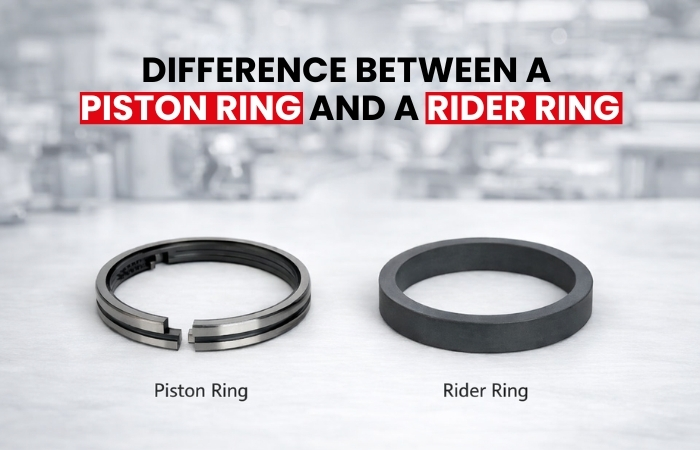
Piston ring and rider ring play a critical role in ensuring smooth and efficient operation in reciprocating compressors and some industrial engines. Both the piston ring and rider ring are circular rings installed around the piston, serving different functions within the system.
Piston rings are responsible for sealing combustion gases, controlling oil, and transferring heat from the piston to the cylinder wall. Rider rings, on the other hand, are designed to guide and support the piston, preventing direct metal-to-metal contact and reducing wear inside the cylinder.
What is a Piston Ring?
A piston ring is a metallic split ring that is between grooves on the outer diameter of a piston in an internal combustion engine or steam engine. Its purpose is to seal combustion gases, control oil, and transfer heat from the piston to the cylinder wall.
There are generally three main types of piston rings: compression rings, which seal combustion pressure; wiper or second rings, which assist in sealing and oil control; and oil control rings, which regulate the oil film on the cylinder surface. These rings are typically made from high-grade cast iron or alloy steel.
What is a Rider Ring?
A rider ring is a circular guiding component installed on the piston body of a reciprocating compressor. Their main function is to prevent direct metal-to-metal contact between the piston and the cylinder wall.
Rider rings help in maintaining proper alignment of the piston during operation, especially in high-pressure and heavy-duty compressor applications. It absorbs the side load and reduces friction to protect the cylinder liner from wear and scoring.
Rider rings are typically made from non-metallic or composite materials such as PTFE, filled polymers, or bronze-based compounds, depending on the application requirements. These materials provide low friction, high wear resistance, and the ability to operate under demanding industrial conditions.
Key Differences Between Piston Ring and Rider Ring
| Feature | Piston Ring | Rider Ring |
| Primary Function | Sealing & oil control | Guiding & support |
| Installation Position | In piston grooves | Around the piston body |
| Pressure Handling | Handles combustion pressure | Does not seal pressure |
| Material | Cast iron, steel alloys | PTFE, bronze-filled, composite materials |
| Application | Engines & compressors | Mainly compressors |
People Also Read: Difference Between 2-Stroke and 4-Stroke Engine
Functions of Piston Rings vs Rider Rings
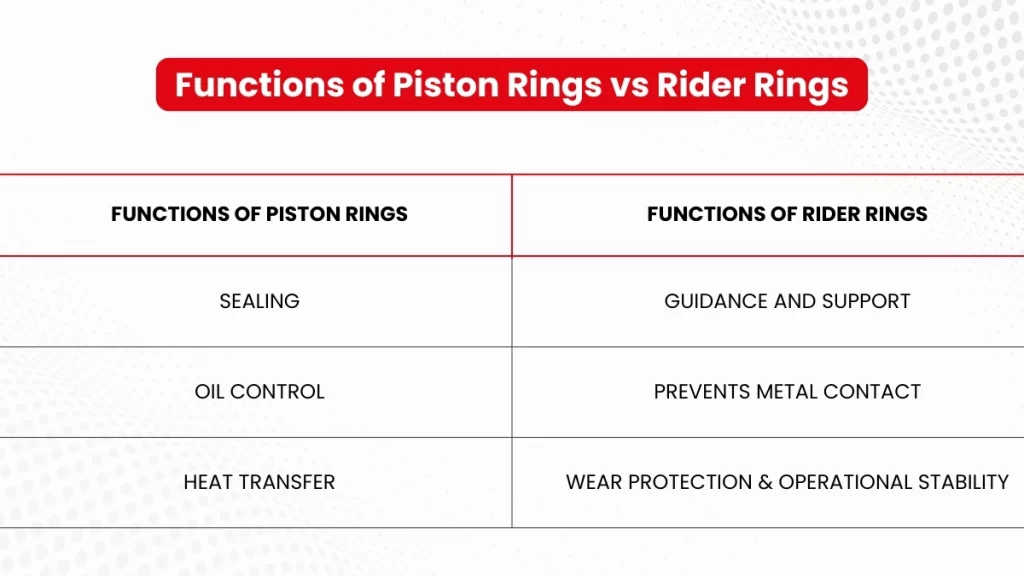
Piston ring and rider ring are both installed on the piston, but with different functions:
Functions of Piston Rings
- Sealing
Piston rings are crucial for sealing the gap between the piston and the cylinder wall, preventing harmful gases from reaching the engine to prevent any kind of engine failure.
Piston rings scrape excess oil back into the crankcase while maintaining enough lubrication to reduce friction and wear.
- Heat Transfer
Piston rings transfer heat from the piston to the cylinder wall, helping dissipate high operating temperatures and preventing overheating.
Functions of Rider Rings
- Guidance and Support
Rider rings keep the piston properly aligned inside the cylinder and absorb side loads during reciprocating motion.
- Prevents Metal Contact
It prevents metal-to-metal contact between the piston and the cylinder liner, reducing friction, protecting the cylinder wall from scoring, and extending equipment life.
- Wear Protection and Operational Stability
Rider rings reciprocate compressors where side thrust forces are significant. By maintaining correct piston positioning, they help ensure smooth and reliable operation.
People Also Read: Why Piston Rings Fail?
Types of Rider Rings
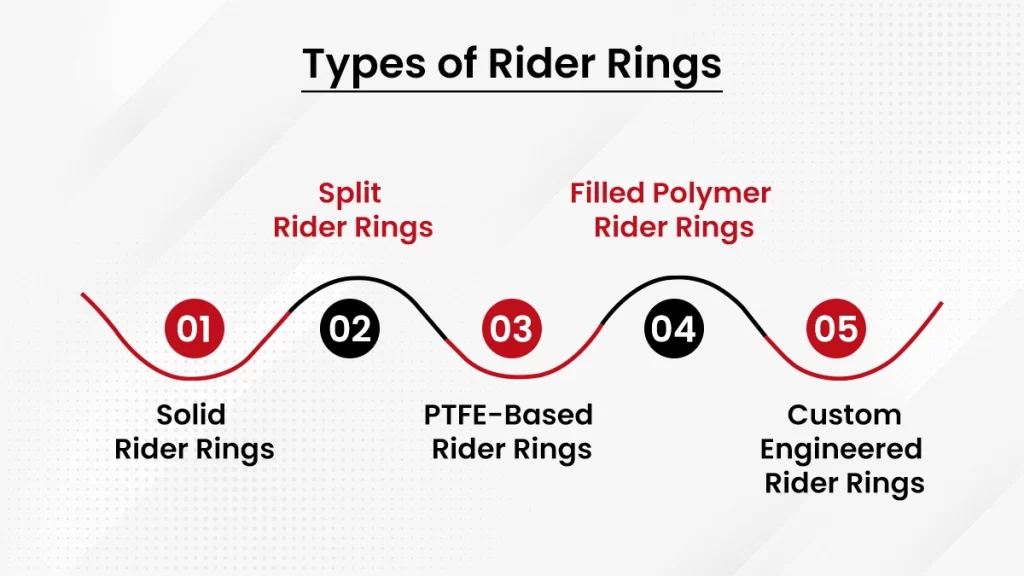
There are different types of rider rings based on different material compositions, design, and application requirements. Here is the best as per your system:
1. Solid Rider Rings
Solid rider rings provide strong structural support and are commonly used in heavy-duty compressor applications. These rings are manufactured as a single continuous ring without splits, offering high durability and suitability for stable operating conditions where minimal expansion is required.
2. Split Rider Rings
Split rider rings feature a cut or split that makes installation easier and provides greater flexibility during operation. This design accommodates thermal expansion and contraction, making it suitable for varying temperature conditions.
3. PTFE-Based Rider Rings
These rings are usually famous for their low-friction properties and excellent chemical resistance. PTFE (Polytetrafluoroethylene) is ideal for oil-free compressors and applications where minimal lubrication is available. It also reduces wear and ensures smooth piston movement.
4. Filled Polymer Rider Rings
Rider rings are made from advanced composite materials such as carbon-filled, glass-filled, or bronze-filled polymers. These rings are commonly used in high-pressure and high-temperature compressor systems.
5. Custom-Engineered Rider Rings
For specialized industrial applications, rider rings can be custom-designed based on specific operating conditions. Factors like load capacity, speed, gas type, and environmental conditions are considered to ensure optimal performance and extended service life.
Why Choosing the Right Manufacturer Matters
Piston rings and rider rings operate under extreme pressure, temperature, and friction. Even a slight variation in material quality or dimensional accuracy can lead to performance issues, premature wear, or costly equipment downtime. That is why selecting the right manufacturer is critical for ensuring reliability and long service life.
Working with an experienced supplier also means access to technical expertise and customized solutions based on specific operating conditions. Kolbenring India is known for manufacturing high-performance piston rings and delivering durable and precision-engineered components designed specifically for automotive and industrial applications.
Conclusion: Piston Ring and Rider Ring
Understanding the difference between a piston ring and a rider ring is essential for you, so that the next time your car breaks down or your compressor stops working, you will know which part is essential to get, ensuring the efficiency, durability, and safety of reciprocating engines and compressors.
If you are looking for precision-engineered piston rings that deliver performance, durability, and reliability, Kolbenring India is your trusted partner. With expertise in manufacturing high-quality industrial and automotive components, Kolbenring ensures solutions tailored to your specific application needs. Contact Kolbenring India today to discuss your requirements and enhance the performance of your engine or compressor systems.
FAQs: Piston Ring and Rider Ring
1. What is the difference between a piston ring and a rider ring?
Ans: Piston rings are responsible for sealing combustion gases, controlling oil, and transferring heat from the piston to the cylinder wall. Rider rings, on the other hand, are designed to guide and support the piston, preventing direct metal-to-metal contact and reducing wear inside the cylinder.
2. What is the function of the rider ring?
Ans: Rider rings are designed to guide and support the piston, preventing direct metal contact and reducing wear inside the cylinder.
3. What are the three rings on a piston?
Ans: The three rings on a piston are compression rings, wiper rings, and oil ring.