Introduction: Understanding Piston Ring Clearance
The piston ring is an important part of the engine that seals the combustion chamber by preventing gases from leaking into the crankcase, preserving cylinder pressure, boosting engine efficiency, and reducing oil waste.
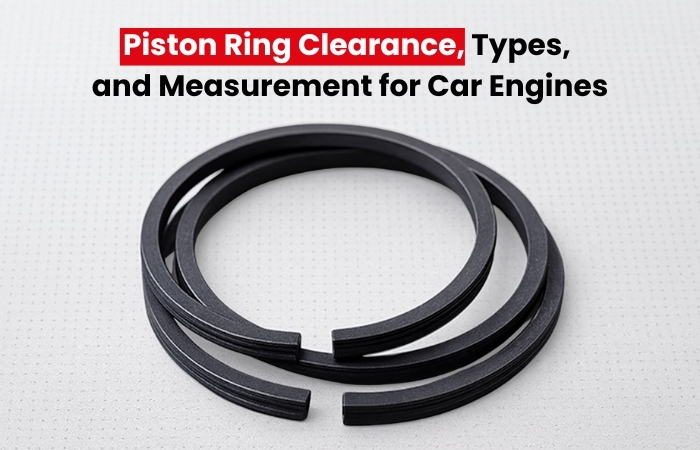
Every piston ring has a gap in between, which is called piston ring clearance. This gap easily allows the ring to expand with heat and perform its role effectively while sealing the combustion chamber, regulating oil, and transferring heat.
In this blog, we will learn about piston ring clearance, its types, measurement, and why it is important in helping to boost engine performance.
What is Piston Ring Clearance?
Piston ring clearance refers to the critical gap between every piston ring, including the end gap, side clearance, and back clearance. These gaps are essential for thermal expansion, proper sealing, and lubrication in an engine.
Piston ring clearance allows the ring to expand with heat and perform its role effectively, sealing the combustion chamber, regulating oil, and transferring heat. Too much or too little clearance can lead to major problems, from excessive oil consumption and reduced power to complete engine failure. That’s why it’s so important to get it just right.
Why Piston Ring Clearance Is Important for Car Engines
Piston ring clearance is important for the car engine, as it allows rings to expand with heat, seal combustion gases, control oil, and prevent binding or seizure, ensuring the engine’s power, efficiency, and longevity.
Insufficient clearance can lead to binding, sticking, and piston seizure, while excessive clearance leads to loss of compression, oil burning, and reduced power, making the piston rings weak and easy to break.
Types of Piston Ring Clearance
Three types of piston ring clearance help the piston rings do their work properly. The three piston ring clearances are 1. End Gap Clearance, 2. Axial Clearance, and 3. Back Clearance. Here is a brief overview of every piston ring clearance:
1. End Gap Clearance
- The end cap clearance is the space between the ring ends. It prevents rings from butting and seizing the piston under high temperatures, which, if it becomes too large, can cause gas blow-by.
- The end gap clearance is also known as the butt clearance.
2. Axial Clearance
- Axial clearance is the space between the ring and its groove in the piston. Axial clearance allows the ring to move freely, seal properly, and dissipate heat; too tight causes sticking and poor sealing, and too loose causes flutter and oil issues.
- The axial clearance is also known as side clearance.
3. Back Clearance
- Back clearance is the space between the piston skirt and cylinder wall. Back clearance is essential for thermal expansion, preventing the piston from seizing in the bore; it is wider for high-performance/boosted engines.
- The back clearance is also known as the piston-to-wall clearance.
How to Measure Piston Ring Clearance
Below are the key methods used to measure different types of piston ring clearance:
1. Measuring End Gap Clearance
- The end gap allows the ring to expand when the engine heats up. If the gap is too large, it can cause serious engine problems.
- Here are some steps to measure end gap clearance:
- Insert the piston ring into the cylinder bore.
- Use the piston head to push the ring slightly down into the bore to keep it square.
- Use a feeler gauge to measure the gap between the ring ends.
- Compare the measurement with the manufacturer’s recommended specifications.
2. Measuring Side (Axial) Clearance
- Side clearance ensures the piston ring can move freely within the groove and maintain proper sealing.
- Here are some steps to measure axial clearance:
- Install the piston ring into its groove on the piston.
- Insert a feeler gauge between the upper surface of the ring and the groove.
- Measure the clearance and compare it with the specified limits.
3. Measuring Back Clearance
- Back clearance allows the ring to expand outward and press against the cylinder wall.
- How to check back clearance:
- Insert the ring into the piston groove.
- Ensure there is space between the back of the ring and the bottom of the groove.
- If the ring touches the groove base, it indicates insufficient back clearance.
People Also Read: Engine Oil Seal

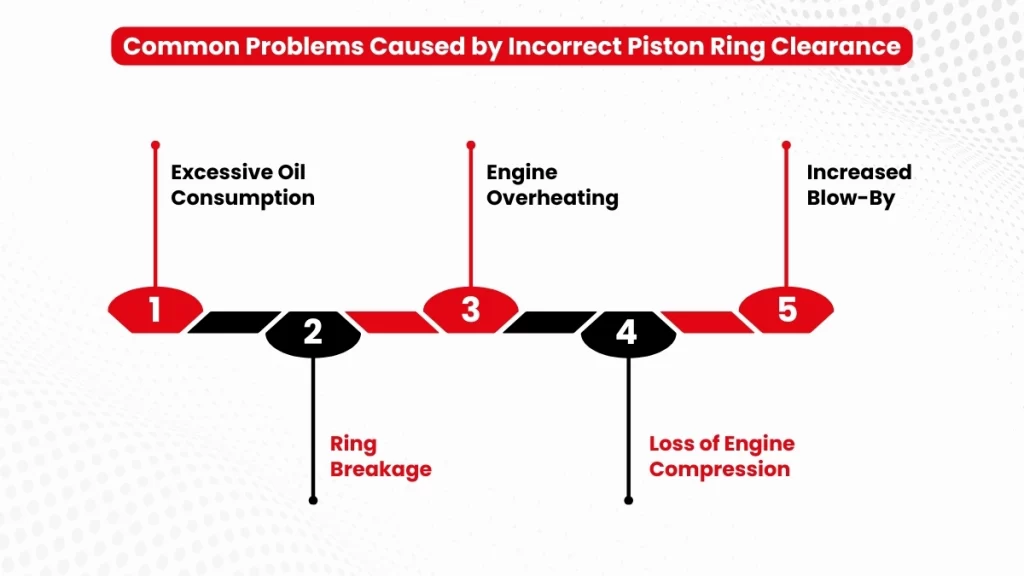
Common Problems Caused by Incorrect Piston Ring Clearance
Here are some common problems caused by piston ring clearance failure:
1. Excessive Oil Consumption
- Incorrect clearance allows engine oil to enter the combustion chamber, resulting in frequent oil top-ups, grey exhaust smoke, and carbon buildup on pistons and valves.
2. Ring Breakage
- If piston ring clearance is too tight, the rings cannot expand properly during engine operation, causing ring binding, cracking, or complete ring failure due to excessive heat and pressure.
3. Engine Overheating
- Improper clearance prevents effective heat transfer from the piston to the cylinder wall, resulting in engine temperatures rising, increasing the risk of engine overheating and premature component wear.
4. Loss of Engine Compression
- If the piston ring clearance is too large, combustion gases escape past the rings into the crankcase, leading to reduced compression, poor acceleration, hard starting, and lower engine power.
5. Increased Blow-By
- Incorrect clearance leads to blow-by, where combustion gases leak into the crankcase. This contaminates engine oil, increases pressure inside the crankcase, and accelerates engine wear.
People Also Read: Piston Ring Material
Why Choosing the Right Piston Ring Manufacturer Matters
Choosing the right piston ring manufacturer plays a critical role in engine performance and reliability. Piston rings operate under extreme conditions of heat, pressure, and friction, which means even minor variations in design or material quality can lead to serious engine issues such as blow-by, oil consumption, or premature wear.
Kolbenring India, with its OEM-approved manufacturing standards and advanced production technology, is a trusted name in the piston ring industry. Their commitment to quality control, material excellence, and precision engineering makes them a preferred choice for automotive and industrial engine applications where performance and durability matter most.
Conclusion: Piston Ring Clearance
Piston ring clearance plays an important role in ensuring smooth engine performance, proper sealing, and long engine life. Correct clearance allows piston rings to expand with heat, control oil effectively, and transfer heat efficiently. When the clearance is not maintained properly, it can lead to oil consumption, power loss, overheating, and early engine failure.
By understanding piston ring clearance, its types, and correct measurement methods, you can avoid these problems and improve overall engine efficiency. For high-quality, precision-engineered piston rings that meet OEM standards, Kolbenring India is a trusted choice.
If you have any questions or need expert guidance, feel free to fill out the Contact Us form on our website. Our team will be happy to assist you with the right piston ring solutions for your engine.
FAQs Related to Piston Ring Clearance
1. What is the clearance of pistons?
Ans: The piston ring clearance is the crucial gap between the piston rings and it’s cylindrical walls, allowing for thermal expansion, oil lubrication, and sealing, while preventing binding or excessive noise.
2. How to take piston ring clearance in the main engine?
Ans: Place the piston ring flat on the piston and push it towards the top of the engine, then measure the gap at the ring’s opening using a thickness gauge.
3. How to set the ring gap on pistons?
Ans: Insert the piston ring into the cylinder bore, square it using the piston, and measure the end gap with a feeler gauge. Adjust carefully by filing the ring ends if the gap is smaller than the manufacturer’s specification.
4. What tool is used to measure piston ring clearance?
Ans: The CB Performance Ring Gap Alignment Tool is used to measure piston ring clearance.