Common Reciprocating Compressor Problems and How to Fix Them
Introduction: Why Reciprocating Compressor Problems Should Not Be Ignored
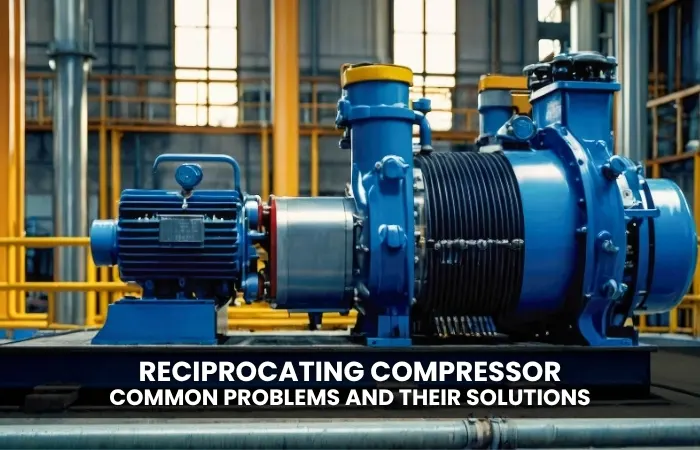
Reciprocating compressors are an important part of many industries, including oil and gas, manufacturing, chemical processing, and refrigeration. They are used to compress gases at high pressures. Since these machines operate continuously under high pressure, temperature, and friction, their components can experience wear and performance issues over time.
Ignoring early signs of wear and tear can reduce compressor efficiency and lead to component damage, unexpected downtime, and expensive repairs. In this blog, we will discuss common problems, possible causes, effective solutions, and maintenance practices that help extend compressor life and improve operational efficiency.
What Are the Common Problems in a Reciprocating Compressor?
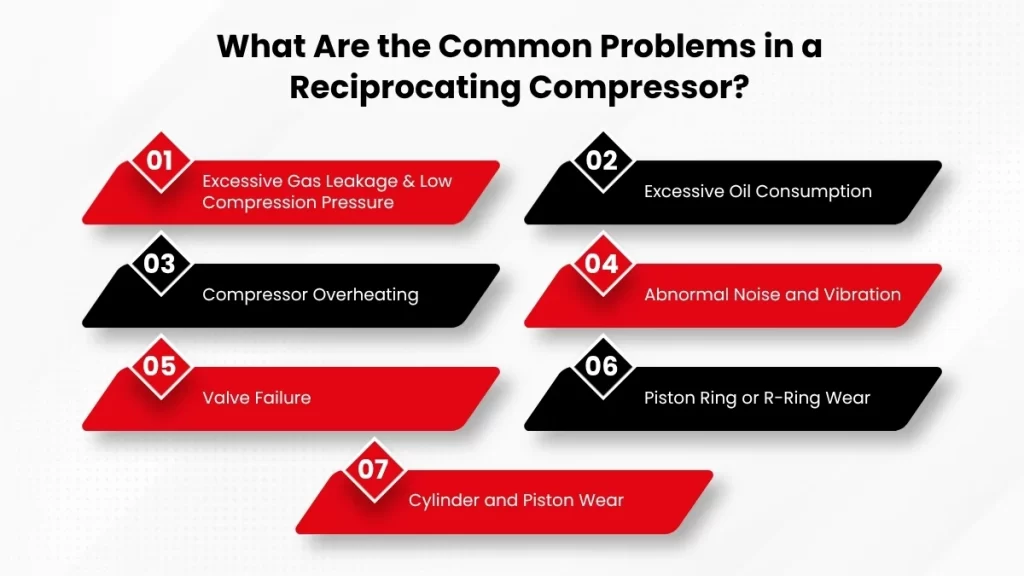
Here are some common problems in a reciprocating compressor:
1. Excessive Gas Leakage & Low Compression Pressure
Worn piston rings, damaged valves, or poor sealing can allow compressed gas to escape, reducing compression efficiency, preventing full compression, and increasing energy consumption.
2. Excessive Oil Consumption
Excessive oil consumption can affect equipment performance and increase maintenance requirements. This happens due to worn piston rings, damaged oil-control components, or improper lubrication.
3. Compressor Overheating
Restricted cooling, insufficient lubrication, excessive friction, or high discharge pressure can cause the compressor to overheat. Continuous operation at excessive temperatures can damage internal components.
4. Abnormal Noise and Vibration
Unusual noises or vibrations from the compressor indicate loose components, worn bearings, piston problems, misalignment, or inadequate lubrication. Ignoring these signs can lead to expensive maintenance or even machine failure.
5. Valve Failure
Compressor valves operate continuously and can become worn, damaged, or contaminated. Valve problems can cause gas leakage, reduced capacity, increased temperature, and inefficient compression.
6. Piston Ring or R-Ring Wear
Piston rings in the compressor prevent gases from leaking. But due to high heat or pressure, these rings can wear out, reducing sealing efficiency, increasing gas leakage, and lowering compressor performance.
7. Cylinder and Piston Wear
Continuous contact between the piston, rings, and cylinder can gradually cause surface wear. Excessive wear can affect sealing, increase oil consumption, and reduce compression efficiency.
How to Fix Common Reciprocating Compressor Problems
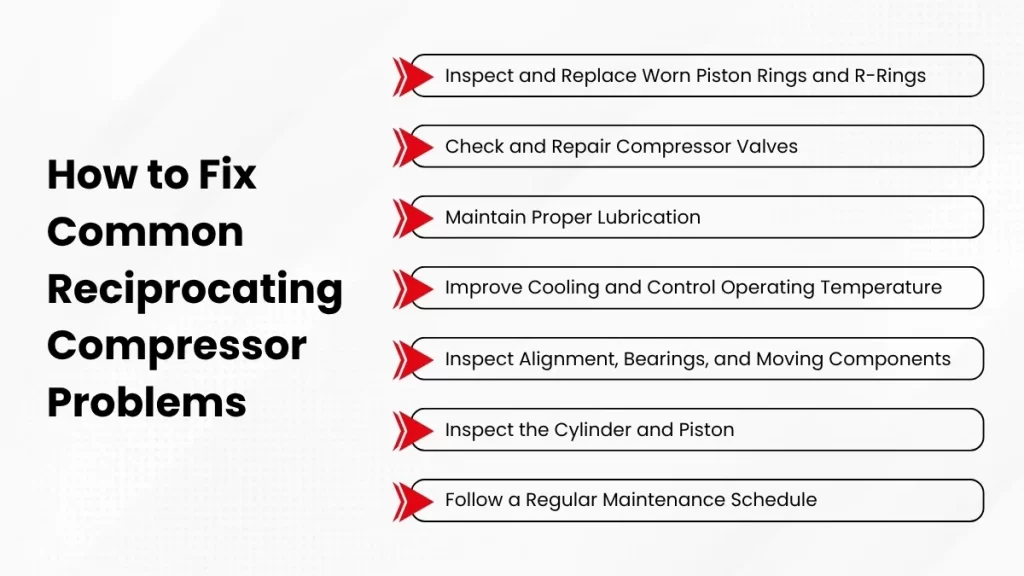
Here are some fixes for reciprocating compressor problems:
1. Inspect and Replace Worn Piston Rings and R-Rings
Worn piston rings can cause gas leakage, low compression, and increased oil consumption. Replace the worn rings with new, correctly sized, high-quality piston rings for smoother operation.
2. Check and Repair Compressor Valves
Inspect suction and discharge valves for wear, cracks, or other damage. Cleaning or replacing faulty valves can restore proper gas flow, improve compression, and prevent further pressure and temperature problems.
3. Maintain Proper Lubrication
Check lubricant levels and ensure the compressor is using the recommended lubricant. Contaminated or insufficient lubrication should be addressed promptly to reduce friction, heat generation, and wear on internal components.
4. Improve Cooling and Control Operating Temperature
If the compressor is always overheating, check the cooling system, airflow, and other components responsible for removing heat from the compressor.
5. Inspect Alignment, Bearings, and Moving Components
Unusual noise or vibration can be a sign of part misalignment. Loose, damaged, or worn parts should be repaired or replaced to restore smooth operation.
6. Inspect the Cylinder and Piston
Check the cylinder and piston surfaces for scratches, wear, or cracks. Minor wear may require reconditioning, while severely damaged components may need replacement to restore proper sealing and compression.
7. Follow a Regular Maintenance Schedule
Regular inspections, lubrication, component checks, and timely replacement of worn parts can prevent minor issues from developing into major compressor failures.
Why High-Quality Compressor Components Matter
High-quality components help the reciprocating compressor continue operating smoothly even under high pressure, temperature, and continuous mechanical stress. Piston rings/R-rings, valves, cylinders, and bearings are important components that withstand constant friction and load while maintaining proper sealing and movement.
In particular, high-quality piston rings maintain effective sealing between the piston and cylinder, supporting compression efficiency. Choosing components from an experienced and reliable manufacturer such as Kolbenring India can help ensure consistent quality, application-specific solutions, and longer component life.
Conclusion: Maintaining Reliable Reciprocating Compressor Performance
Reciprocating compressors face many problems, including gas leakage, low compression, overheating, valve failure, excessive oil consumption, and piston ring wear, which can affect their performance and reliability. Regular inspections, proper lubrication, effective cooling, timely replacement of worn components, and the use of high-quality piston rings can improve sealing, reduce friction and wear, and extend the compressor’s service life.
Looking for reliable piston rings or R-rings for your reciprocating compressor? Contact Kolbenring India today to discuss your requirements and find the right solution for your application.
FAQs: Common Reciprocating Compressor Problems
1. What are common problems with reciprocating compressors?
Ans: Here are the common problems with reciprocating compressors:
- Excessive gas leakage
- Low compression pressure
- Excessive oil consumption
- Compressor overheating
- Abnormal noise and vibration
- Valve failure
- Piston ring or R-Ring wear
- Cylinder and piston wear
2. What is the most common cause of a compressor failure?
Ans: The most common cause of a compressor failure is overheating. Other causes also include poor lubrication, system contamination, etc.
3. What is the most common type of reciprocating compressor?
Ans: The single-acting reciprocating compressor is the most common type.
4. How to fix compressor failure?
Ans: Here are some ways to fix compressor failure:
- Inspect and replace worn piston rings and R-Rings
- Check and repair compressor valves
- Maintain proper lubrication
- Improve cooling and control operating temperature
- Inspect alignment, bearings, and moving components
- Inspect the cylinder and piston
- Follow a regular maintenance schedule