Introduction: What Are Piston Rings for Hydraulic Cylinders?
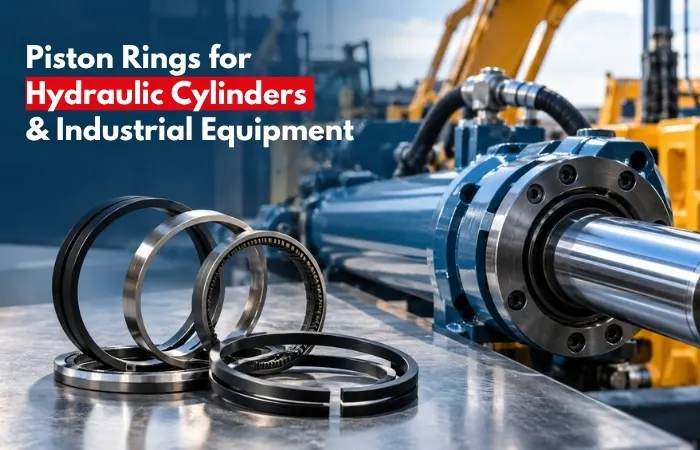
Piston rings for hydraulic cylinders are sealing and guiding components installed around the piston to support smooth and efficient cylinder operation. They seal the piston to the cylinder wall, limit hydraulic fluid leakage, and allow the piston to move with controlled friction.
Their performance depends on factors such as ring design, material, operating pressure, temperature, and clearance, so choosing the right piston ring is key to reliable performance in hydraulic and industrial equipment.
How Do Piston Rings Work in Hydraulic Cylinders?
Piston rings in hydraulic cylinders help prevent excessive hydraulic fluid from passing between the piston and cylinder, maintaining the system’s required pressure and operating efficiently. At the same time, the rings provide controlled contact with the cylinder surface to reduce friction and wear during repeated movement.
Ring design and clearance are important to balance out the sealing and smooth movement. Properly selected piston rings can minimize leakage, support consistent hydraulic performance, and improve the service life of the cylinder and its components.
Key Functions of Piston Rings in Hydraulic Systems
Some key functions of piston rings include:
- Preventing fluid leakage: Piston rings minimize the movement of hydraulic fluid between the piston and cylinder wall, helping maintain operating pressure.
- Maintaining effective sealing: They provide a controlled sealing interface that supports consistent cylinder performance during piston movement.
- Reducing friction and wear: Properly designed rings help control friction between moving surfaces, reducing wear on the piston and cylinder.
- Supporting smooth piston movement: They help guide the piston and maintain stable movement during repeated extension and retraction cycles.
- Improving component life: By controlling leakage, friction, and wear, piston rings can help extend the service life of the hydraulic cylinder and related components.
- Supporting reliable operation: Properly selected piston rings help hydraulic equipment maintain consistent performance under demanding operating conditions.
Materials Used for Hydraulic Cylinder Piston Rings
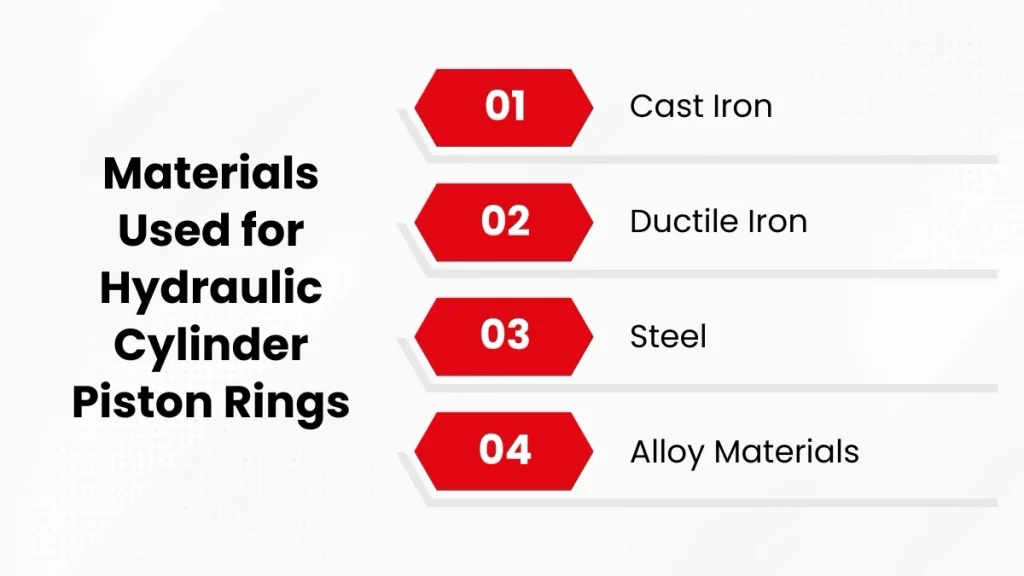
Material selection depends on pressure, temperature, speed, and operating environment. Here are some materials used for hydraulic cylinder piston rings:
1. Cast Iron
Cast iron provides good wear resistance, dimensional stability, and suitable friction characteristics for continuous piston movement. It is commonly used in demanding industrial applications.
2. Ductile Iron
Ductile iron offers greater strength and toughness than standard cast iron. It is usually suitable for applications involving higher loads and mechanical stress.
3. Steel
Steel is selected based on the cylinder’s operating conditions and mating materials. It provides good wear resistance and friction characteristics. It is for applications where smooth movement and durability are required.
4. Alloy Materials
Alloy materials provide enhanced strength, wear resistance, or temperature performance. They are used when standard materials may not meet specific application requirements.
Importance of Piston Ring Clearance in Hydraulic Cylinders
The right piston ring clearance depends on the ring design, material, cylinder dimensions, operating pressure, temperature, and application.
- Controls Hydraulic Fluid Leakage: Proper clearance limits excessive fluid movement past the piston while maintaining effective sealing.
- Supports Smooth Piston Movement: The right clearance prevents excessive contact between the ring and cylinder wall, helping reduce friction during piston movement.
- Reduces Wear: Correct clearance minimizes unnecessary friction and surface contact, helping extend the life of the piston ring and cylinder.
- Accommodates Thermal Expansion: Adequate clearance allows the ring to accommodate dimensional changes caused by temperature variations during operation.
- Maintains Hydraulic Pressure: Excessive clearance can increase fluid leakage and reduces pressure, affecting cylinder performance.
- Prevents Ring Damage: Insufficient clearance can increase friction and the risk of ring sticking, deformation, or premature failure.
- Improves Cylinder Reliability: Properly specified clearance helps maintain consistent sealing and reliable performance over repeated operating cycles.
Common Problems Caused by Worn or Damaged Piston Rings
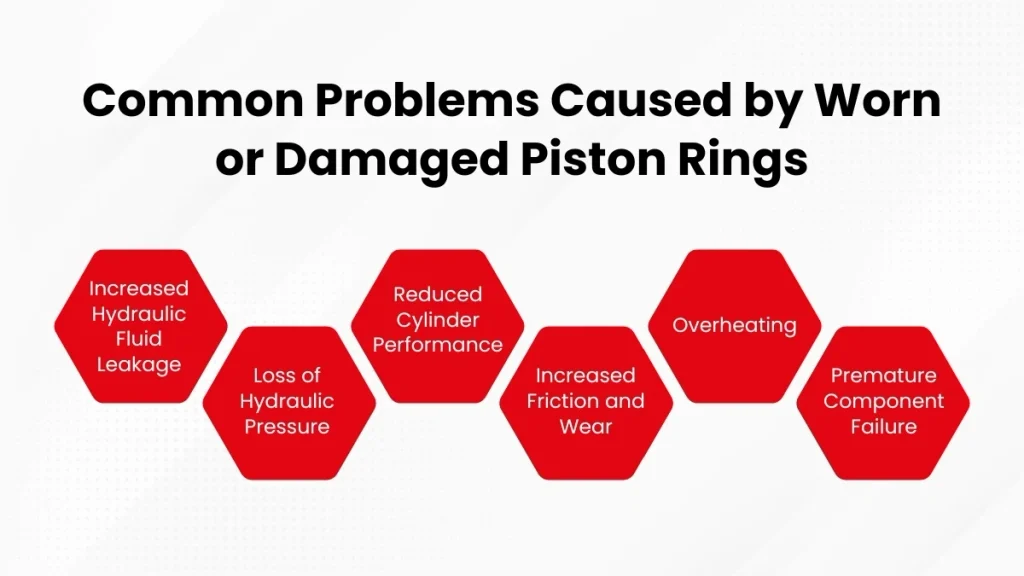
Here are some common problems caused by damaged piston rings:
1. Increased Hydraulic Fluid Leakage
When piston rings are damaged, they might let hydraulic fluid to pass between the piston and cylinder wall, resulting in increased internal leakage and reduced sealing efficiency.
2. Loss of Hydraulic Pressure
Excessive hydraulic fluid loss can prevent the cylinder from maintaining the required pressure, affecting its ability to generate the required force.
3. Reduced Cylinder Performance
Under high operating pressure, damaged rings can cause inconsistent piston movement, slower operation, or reduced efficiency.
4. Increased Friction and Wear
A damaged or improperly fitted ring may create excessive friction against the cylinder wall, accelerating wear on both the ring and mating surfaces.
5. Overheating
Excessive friction between the ring and cylinder wall can generate additional heat, potentially affecting the performance and service life of nearby components.
6. Premature Component Failure
Continued operation with worn piston rings can put extra stress on the piston, cylinder wall, seals, and other hydraulic components, increasing maintenance requirements and the risk of premature failure.
Conclusion: Piston Rings for Hydraulic Cylinders
Piston rings play an important role in maintaining sealing, pressure, and smooth operation of hydraulic cylinders and industrial equipment. The right combination of material, ring design, and clearance can help control hydraulic fluid leakage, reduce friction and wear, and improve overall cylinder reliability.
Choosing piston rings for specific operating conditions is essential for consistent performance and longer service life. Kolbenring India offers precision-engineered piston rings designed to meet the requirements of demanding industrial applications. Contact Kolbenring India to discuss your application and find the right piston ring solution for your hydraulic or industrial equipment.
FAQs: Piston Rings for Hydraulic Cylinders
1. What are the three types of piston rings?
Ans: The three types of piston rings are compression Rings, wiper rings, and scraper rings.
2. What is a piston ring used for?
Ans: A piston ring is used to seal the combustion chamber, control engine oil, and transfer heat.