What are Seal Rings? Types, Uses & Industrial Applications
Introduction
In every industry, whether it’s automotive, aerospace, oil & gas, or heavy manufacturing, one small component plays a massive role in ensuring smooth and safe operations: seal rings. The seal rings are the main sealing components, with one typically stationary and the other rotating with the shaft to create a leak-proof barrier between the shaft and the housing.
Seal rings come in various types, each tailored for specific applications, from sealing fuel systems in cars to handling extreme pressures in oil rigs. In this blog, we will discover the work, types, uses, and industrial applications of seal rings.
What are Seal Rings?
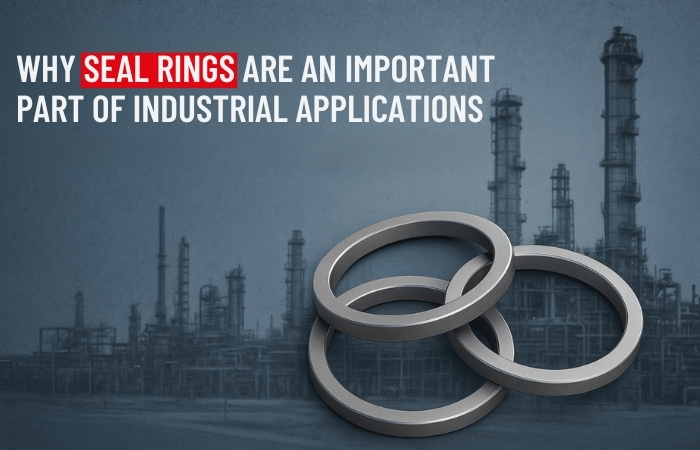
Seal rings are a component in machinery that prevents leakage of fluid or gas and keeps out contaminants. In mechanical applications, seal rings, such as O-rings, are compressed within a groove or gland, creating a tight seal between two surfaces to maintain pressure and prevent contamination.
These seal rings are used in pumps, valves, engines, and other systems to prevent leaks and protect components from contaminants and lubricant escape.
Seal rings are versatile, cost-effective, and ideal for dynamic sealing needs, unlike other sealing components (like gaskets or mechanical seals), which are used for more specific or static purposes.
Types of Seal Rings\ Piston ring
There are many types of seal rings with different uses and different variations, and these are some of the most used seal rings out of them:
- O-Rings\ Piston ring: O-rings are a mechanical, circular-shaped gasket with a circular cross-section, made from elastomeric materials like rubber or thermoplastics such as PTFE. It functions as a seal in both static and dynamic applications, creating a tight barrier between two mating parts to prevent the leakage of fluids or gases.
- Piston Rings: Piston rings are metallic split rings that are between grooves on the outer diameter of a piston in an internal combustion engine or steam engine. They help in sealing the combustion chamber by preventing gases from leaking into the crankcase and preserving cylinder pressure and boosting engine efficiency.
- Hydraulic Seal Rings\ Piston ring: Hydraulic seal rings are non-metallic elements, typically crafted from materials like polyurethane or rubber. They create a secure barrier within hydraulic systems, ensuring fluid retention, blocking contaminants, and preventing leakage between moving components such as pistons and rods.
- Metal Seal Rings\ Piston ring: Metal sealing rings are specialized rings, made from resilient metals like stainless steel or Inconel alloys, designed to create a leak-proof barrier between two surfaces in demanding environments where elastomer seals would fail.
- Specialized Seal Rings\ Piston ring: Specialized seal rings are custom-engineered sealing components designed for specific, demanding applications in industries like aerospace, automotive, and chemical processing.
Key Uses of Seal Rings
- Preventing leakage: Seal rings are used to prevent leakage of fluids and gases, creating a leak-proof barrier between the shaft and the housing.
- Enhancing durability: Seal rings block dust, dirt, and other contaminants from entering sensitive machinery, protecting parts from wear and tear, and making the overall system durable.
- Improving performance: By sealing moving components like pistons and rods, they reduce friction and extend the lifespan of machines.
- Cost savings: Proper sealing minimizes fluid loss and maintenance requirements, saving both energy and operational costs.
Industrial Applications of Seal Rings
Seal rings are used in many industrial applications, benefiting most of the industries; however, there are some industries in which they are used the most, like:
1. Automotive Industry
The automotive industry is one of the biggest industries that uses seal rings in their Engines, gearboxes, and fuel systems to prevent leakage of fluids and gases.
2. Oil & Gas Industry
In the oil & gas industry, they help pipelines, compressors, and drilling equipment to handle high pressure, extreme temperatures, and corrosive environments by sealing them before they are reached.
3. Aerospace
Aircraft engines and hydraulic systems rely on seal rings for high-precision sealing, ensuring safety and reliability in flight.
4. Manufacturing
Pumps, turbines, and hydraulic presses use seal rings to maintain efficiency, reduce wear, and minimize downtime.
5. Pharmaceutical & Food Industry
Seal rings maintain hygienic, contamination-free sealing in pumps, mixers, and filling machines where product purity is critical.
Factors to Consider When Choosing Seal Rings
It is important to consider these factors when choosing the right seal ring. Here are the key factors you should keep in mind:
1. Material Compatibility
Choosing the seal ring with the right material, like rubber, polyurethane, or metal, is important so that it can handle the fluids, gases, or chemicals in your system.
2. Operating Temperature & Pressure
Check whether the seal ring can withstand the required heat, cold, and pressure without losing its performance in the engine.
3. Chemical Resistance
In industries like oil & gas or pharmaceuticals, seal rings must resist corrosion and chemical reactions to avoid breakdowns and internal combustion.
4. Wear & Tear Resistance
Selecting rings that are wear & tear resistant helps to reduce friction and last longer. These types of rings are mostly used for moving parts like pistons or rods.
5. Cost-Effectiveness
While improving quality is crucial, the right seal ring should also be affordable and reduce long-term maintenance costs.
Advantages of Seal Rings in Industries
1. Reliability & durability
Seal rings are used to prevent the harmful gases and fluids from escaping and keep out contaminants. That is why they must be reliable and durable so that these harmful gases don’t escape.
2. Safety assurance
Seal rings help in controlling pressure and preventing leaks, reducing the risk of accidents and equipment failures in mechanical systems.
3. Reduced downtime
Proper sealing ensures smooth operation, helping machines run more efficiently and reliably, reducing the runtime of the overall machinery.
4. Eco-friendly sealing
By preventing harmful leaks, seal rings help industries reduce waste and protect the environment.
Conclusion
From preventing leaks and maintaining pressure to improving durability, safety, and efficiency, seal rings are at the heart of reliable operations across industries like automotive, aerospace, oil & gas, manufacturing, and pharmaceuticals. Choosing the right seal ring—based on material, temperature, pressure, and resistance—ensures not only long-term performance but also cost savings and environmental protection.
At the end of the day, seal rings are not just sealing components; they are critical to the smooth functioning of modern industry.
If you are looking for high-quality, durable, and precision-engineered seal rings\ Piston rings, Kolbenring is a trusted seal ring manufacturer offering advanced sealing solutions for multiple industries. Contact us to explore our wide range of seal rings designed to deliver efficiency, reliability, and long-lasting performance.
FAQs
1. What is a seal ring used for?
Ans- Seal rings are used to create a leak-proof barrier between the shaft and the housing.
2. Are seal rings waterproof?
Ans- Yes, seal rings are completely waterproof, as they prevent fluids from leaking.
3. What is the difference between a gasket and a seal ring?
Ans- Seal rings are typically round like doughnuts and vary in thickness, while gaskets are flat seals that sit between two flat surfaces.
4. What is the lifespan of a seal ring?
Ans- The life of a seal ring is around 5-10 years, depending on how harshly it is being used.