What is the Process of a Continuous Casting Machine?
What is a Continuous Casting Machine?
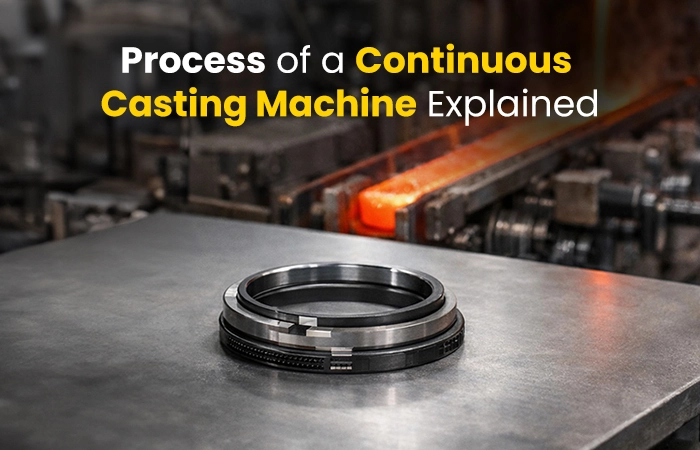
A continuous casting machine (CCM) is an industrial system that solidifies molten metal, such as steel, aluminum, and copper, into a continuous, semi-finished solid strand of billets, blooms, or slabs for subsequent rolling.
This process is at the core of modern manufacturing, where molten metal is poured into a continuous casting machine, eventually solidifying into the desired shape and dimensions.
This machine is widely used in industries such as steel plants, foundries, and heavy manufacturing for converting different types of metals into their desired shape.
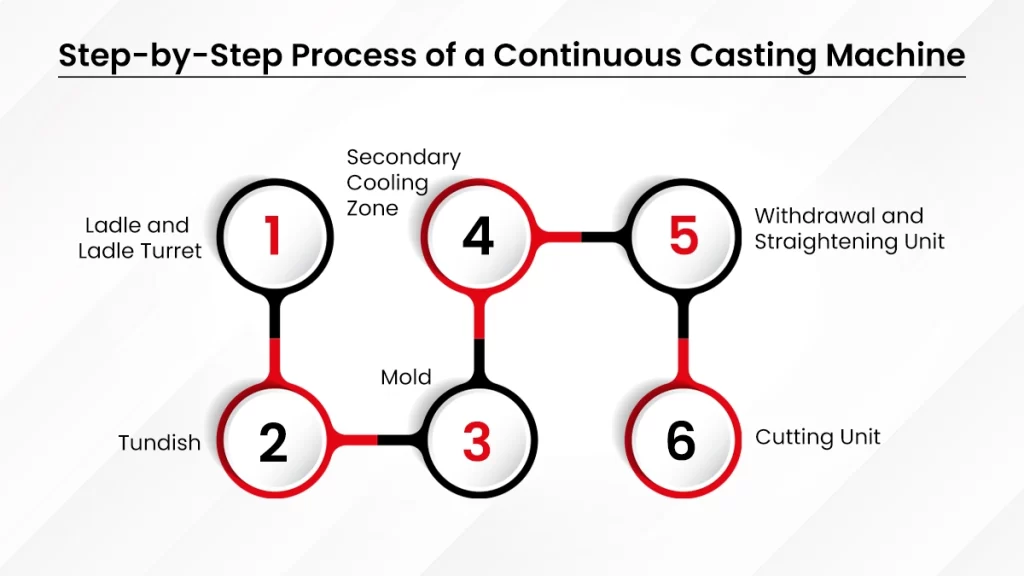
Step-by-Step Process of a Continuous Casting Machine
A continuous casting machine consists of many critical units that work together to convert molten metal into solid, semi-finished products like billets, blooms, and slabs. Each unit plays a specific role in ensuring smooth metal flow, controlled solidification, and consistent product quality. Here are the steps:
1. Ladle and Ladle Turret
- A ladle in a casting machine holds the molten steel after it leaves the furnace. It is mounted on a ladle turret, allowing one ladle to pour molten metal while another is prepared for the next cycle, ensuring uninterrupted production.
2. Tundish
- The tundish regulates the flow of molten steel into the mold at a controlled rate and removes impurities and inclusions. By maintaining a steady flow, the tundish ensures consistent casting quality and reduces turbulence.
3. Mold
- The mold is typically made of water-cooled copper; It gives the molten steel its initial shape and begins the solidification process. Rapid cooling in the mold forms a solid outer shell while the inner core remains molten.
4. Secondary Cooling Zone
- The partially solidified strand enters the secondary cooling zone, where water sprays or mist cooling systems further solidify the metal. Proper cooling control in this stage is essential to prevent cracks, distortion, or internal defects.
5. Withdrawal and Straightening Unit
- This unit pulls the solidifying strand downward at a controlled speed. In curved casting machines, it also straightens the strand before it exits the system. Consistent withdrawal speed ensures uniform structure and prevents stress-related defects.
6. Cutting Unit
- Once fully solidified, the metal strand is cut into required lengths using torch cutters or mechanical shears. The cutting unit ensures precision sizing according to production requirements, preparing the billets, blooms, or slabs for further processing.
Types of Continuous Casting Machines
There are five types of continuous casting machines: 1. Vertical Continuous Casting Machine, 2. Vertical Bending Continuous Casting Machine, 3. Curved Mold Continuous Casting Machine, 4. Horizontal Continuous Casting Machine, and 5. Multi-Strand Continuous Casting Machine. Here is their brief explanation:
1. Vertical Continuous Casting Machine
- In a vertical continuous casting machine, molten metal flows straight down from the mold, and the strand solidifies vertically before being cut into required lengths. This type is simple in design and ensures uniform solidification, but requires more vertical space and height in the plant.
2. Vertical Bending Continuous Casting Machine
- This design starts vertically and then gradually bends the strand into a curved path, combining the advantages of vertical casting with improved space utilization. It also reduces plant height requirements while maintaining good metal quality and controlled solidification.
3. Curved Mold Continuous Casting Machine
- In this type, the mold itself is curved, and the strand follows a curved path from the beginning.
- Curved mold CCMs are widely used in modern steel plants because they save space, allow smoother strand movement, and improve production efficiency.
4. Horizontal Continuous Casting Machine
- In a horizontal continuous casting machine, molten metal flows horizontally from the mold. This type is commonly used for non-ferrous metals like copper and aluminum, and for smaller production capacities. It requires less building height and is suitable for compact plant setups.
5. Multi-Strand Continuous Casting Machine
- A multi-strand CCM can cast multiple strands simultaneously from a single tundish. It increases productivity and output, making it ideal for high-volume steel production plants.
Common Challenges in Continuous Casting
Continuous casting machines operate under extreme heat, pressure, and continuous production cycles. In such demanding conditions, the quality of components directly affects productivity, dimensional accuracy, and surface quality of the final product.
High-quality components provide better resistance to wear and thermal stress, ensure longer service life, and result in fewer unexpected breakdowns. Durable materials reduce maintenance frequency, minimize downtime, and improve overall operational efficiency, helping steel plants maintain consistent output while controlling long-term costs.
This is why choosing a reliable manufacturer matters. Kolbenring India, known for precision engineering and high-performance industrial components, serves as a trusted partner for continuous casting applications, delivering durable and quality-assured solutions designed for demanding industrial environments.
Conclusion: This is Where the Process Ends
Continuous casting machines play a vital role in modern steel and metal production by transforming molten metal into solid, semi-finished products with speed, precision, and efficiency. From the ladle to the cutting unit, every component works together to ensure controlled solidification and consistent product quality.
Since continuous casting operates under extreme thermal and mechanical stress, the reliability of components becomes critical for smooth operations and long-term productivity.
Kolbenring India offers robust, high-quality industrial components designed to perform in demanding casting environments. To learn more about our solutions, get in touch with our team through the Contact Us page and discover how we can support your operations.
FAQs: Continuous Casting Machine
1. What are the major components of a continuous casting machine?
Ans: Ladle, tundish, mold, secondary cooling zone, withdrawal, and cutting unit are the major components of a continuous casting machine.
2. What are the six materials used for casting?
Ans: Most commonly used materials in metal casting include gray iron, ductile iron, aluminium, steel, copper, and zinc.
3. Types of continuous casting machines?
Ans: There are five types of continuous casting machines: 1. Vertical Continuous Casting Machine, 2. Vertical Bending Continuous Casting Machine, 3. Curved Mold Continuous Casting Machine, 4. Horizontal Continuous Casting Machine, and 5. Multi-Strand Continuous Casting Machine.