Understanding the role and uses of Piston Rings in Engines
Internal combustion engines are systems with various components that work together to provide power and efficiency. We often neglect the important part of the engine, i.e., the piston ring.
It may look small in size, but piston rings play an important role in ensuring the smooth performance of the engine. This blog will talk about the uses and functions of piston rings in internal combustion engines, their types, and their impact on engine performance, along with maintenance tips for longevity.
1. What are Piston Rings?
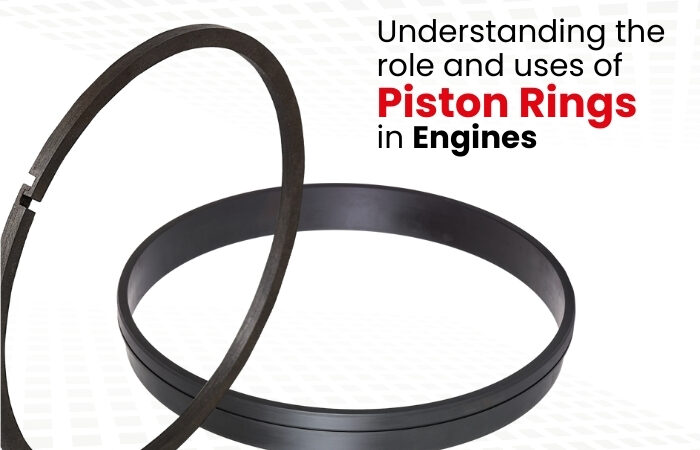
In technical terms, piston rings are circular metallic components that fit into grooves around a piston. They create a seal between the piston and the cylinder wall in an engine.
If we don’t use piston rings, combustion gases would escape, resulting in oil leakage, which would drastically reduce the efficiency and performance of the engine.
Wanna know about the Piston Ring Industry in 2025? Read this blog: Piston Ring Industry in India 2025 | Market Growth & Demand
Materials used for Piston Rings
They are typically made from materials such as steel, cast iron, or alloys, which ensure strength, durability, and heat resistance.
Steel rings make sure that the engine performs at high performance due to their superior wear resistance, whereas cast iron is used due to its cost-effectiveness and good sealing properties.
Where are piston rings placed?
Piston rings are placed inside the grooves of the piston, which moves up and down inside the cylinder by interacting with the walls.
They create a tight seal to prevent gas leakage and also help in controlling oil flow, which ensures that only a small amount of oil lubricates the engine components.
2. Main Functions of Piston Rings
As discussed above, the main function of piston rings is to revolve around maintenance and improving engine efficiency.
Below are the major roles they play:
1. Sealing the Combustion Chamber-
One of the major functions of piston rings is to seal the combustion chamber by forming a strong contact between the rings and the cylinder walls. When the engine is running, with the movement inside the cylinder, the piston rings prevent the escape of combustion gases.
The process is dependent on the pressure to drive the piston down, which turns the crankshaft. Piston rings should be maintained to prevent them from getting damaged or worn, avoid a loss of compression, and reduce engine power.
2. Controlling Oil Consumption-
Regulating oil consumption in the engine is another important function of piston rings. The rings are responsible for scraping excess oil off the cylinder walls and returning it to the oil pan. The piston rings control the oil flow and ensure that the engine operates efficiently without burning the excess oil.
If the oil control is inadequate, it can result in increased oil consumption, poor combustion, and the emission of harmful smoke from the exhaust. Oil control rings are specially designed to minimize the excess burning oil by precisely managing the amount of oil used for lubrication.
3. Heat Transfer-
Piston rings play a vital role in transferring heat from the piston to the cylinder wall. As the engine generates heat, the piston absorbs a significant amount of it. It helps in conducting this heat away from the piston and dispersing it. This helps to maintain the optimal engine temperatures, preventing overheating and improving efficiency.
If the heat management is not done properly, it can affect the engine’s longevity or can cause parts of the engine to warp or wear out prematurely.
3. Types of Piston Rings and Their Uses
There are three categories of piston rings, and each of them serves a different purpose in the engine and they are compression rings, oil control rings, and wiper rings.
Let’s look into their specific use-
- Compression rings- These rings are responsible for sealing the combustion chamber during the compression process of the engine cycle. It prevents gas leakage and maintains the engine power and efficiency.
- Oil Control rings– They are crucial for managing the oil flow within the engine and are designed to remove the excess oil from the cylinder walls and return it to the oil pan. They are useful in controlling the amount of oil used for lubrication and preventing excessive oil consumption.
- Wiper Rings- Rings used in conjunction with oil control rings to clean and maintain the proper oil flow are wiper rings. They also wipe off excess oil from the cylinder walls and ensure that the rings function properly.
4. What is the impact of Piston rings on Engine Performance
As we discussed the importance of piston rings on engine performance, let’s see how their proper function impacts the overall operation:
- Fuel Efficiency- The proper functioning of piston rings ensures the pressure within the combustion chamber is maintained and leads to better fuel efficiency. They also extract more energy from the fuels due to proper combustion.
- Engine Longevity- This factor is important to make sure the engine remains in good condition for a longer period of time, which can be achieved through using the correct piston rings. They seal and prevent oil leakage, reduce the friction between moving parts, and further extend the life of the engine.
- Power and Torque Output- This factor depends on its ability to compress the air-fuel mixture properly and maintain high pressure in the combustion chamber. Piston rings make sure that the efficiency of the combustion process is maintained, which leads to optimal power and torque.
5. Signs of Worn or Damaged Piston Rings
There are chances of piston rings wearing out or becoming damaged, which can lead to a decline in engine performance. Below are the common signs one should be aware of:
- Decreased Engine Performance- If you come across any engine whose ability to generate power is low, it might be due to worn piston rings. This can further lead to sluggish performance, decreased top speed, and decline in performance.
- Increased Oil Consumption- The main reason behind increased oil consumption could be damaged oil control rings. If you observe that the rings cannot scrape excess oil off the cylinder walls, leading to the burning of more oil, then the piston rings need to be changed.
- Rough Idling or Misfires- Faulty piston rings can be the reason for rough idling or engine misfires, and you can see poor sealing of the combustion chamber or engine instability.
- Blue Smoke from Exhaust- If you observe blue smoke coming from the exhaust, the worn piston rings are the reason. This occurs due to oil leakage into the combustion chamber and burns during the ignition process, creating a blue-colored smoke.
6. How to maintain and replace piston rings?
It is crucial to maintain piston rings for engine efficiency. Here are some of the tips for maintenance and replacement:
Regular Inspection and Maintenance- It is imperative to perform a routine check during oil changes or engine diagnostics to prevent the wearing of piston rings. You must also check the engine’s compression levels and monitor oil consumption.
Identify the time to replace worn piston rings- To replace piston rings, it is complex and requires the disassembling of the engine.
Normally, piston rings are replaced when they are not in appropriate condition to the point where they no longer provide an effective seal. If you come across any symptoms as mentioned above, it is important to consult a mechanic and get it replaced.
Conclusion
In conclusion, we can say that piston rings are essential in maintaining the efficiency, power, and longevity of the engine. They are useful in sealing the combustion chamber, controlling oil consumption, and transferring heat, which are required for smooth engine operation. It requires timely replacement and regular maintenance to prevent engine damage.
It is important to understand the mechanism of piston rings and how it can also help car owners and mechanics troubleshoot engine problems and prevent costly repairs.
If you want your engine to run smoothly, make sure that you regularly maintain your vehicle and check for symptoms of piston ring wear.
If you want to know more about Piston Rings, then contact Kolenring India now!
FAQs
1. What are the main functions of piston rings in engine performance?
Piston rings are used mainly for sealing the combustion chamber, controlling oil consumption, and transferring heat.
2. How do piston rings impact engine performance?
Piston rings impact the engine performance by transferring heat and controlling oil consumption.
3. Can an engine run without piston rings?
No, without a piston ring, we should not run an engine.
4. What is the lifespan of piston rings?
The lifespan of a piston ring is around 1L to 1,5L miles.
5. How to know if piston rings are stuck?
Your piston ring can be stuck if:
- Oil leaks or profuse oil consumption
- Declining engine performance
- Low acceleration