What is an R-Ring? Design, Functions & Applications Explained
Introduction: Understanding R-Rings
R-rings are sealing components commonly used in reciprocating compressors, hydraulics, and other industrial equipment to prevent gas leakage. These rings are designed to work under high temperatures, pressure, and continuous friction.
R-rings improve sealing performance, reduce wear between moving components, and ensure reliable machine performance. They also directly impact the lifespan and performance of industrial machinery. So, choosing the right R-rings is crucial.
In this blog, we will discuss everything you need to know about R-rings, including what they are, their design, functions, applications, materials, industry standards, and which manufacturer is the right one for you.
What is an R-Ring?
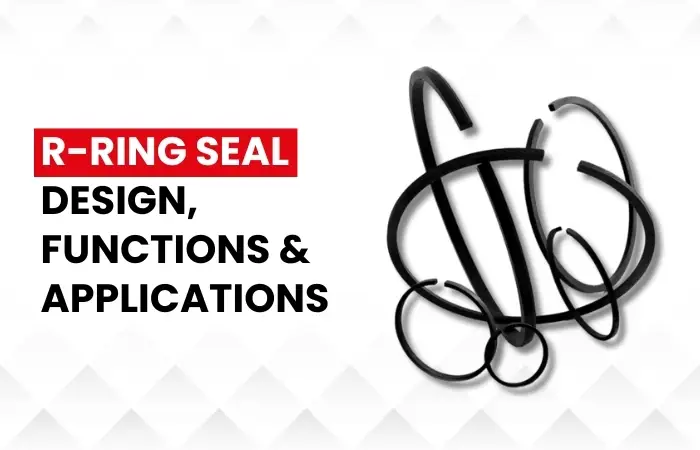
An R-ring seal is a precision-engineered static seal with a larger, optimized contact profile compared to a standard O-ring. These rings are primarily used in heavy machinery to prevent gas from leaking.
It is installed in the piston grooves and works with other sealing components to maintain compression, improve operating efficiency, and ensure smooth compressor performance.
R-rings are designed to withstand high pressure, elevated temperatures, and continuous friction without breaking down.
Design of an R-Ring
R-ring design is made in a way to maintain a tight seal while minimizing wear and ensuring smooth operation:
1. Precision-Machined Construction
R-rings are manufactured with high dimensional accuracy to ensure a precise fit within the piston groove, helping create an effective seal and prevent gas leakage during operations.
2. Split Ring Design
Most R-rings have a split ring design that allows them to expand and contract slightly during installation and operation. This flexibility helps maintain consistent contact with the cylinder wall while accommodating thermal expansion.
3. High-Strength Materials
R-rings are commonly made from high-strength materials such as cast iron, ductile iron, or specialized alloys, providing wear resistance and high mechanical strength.
4. Optimized Sealing Surface
The surface area of an R-ring is specially optimized to provide uniform sealing against the cylinder wall, helping reduce gas leakage, improve compression efficiency, and minimize energy loss.
5. Heat and Pressure Resistance
Since these rings operate under high pressure and heat, they are designed to retain their shape and perform reliably even in demanding operating environments.
Functions of an R-Ring
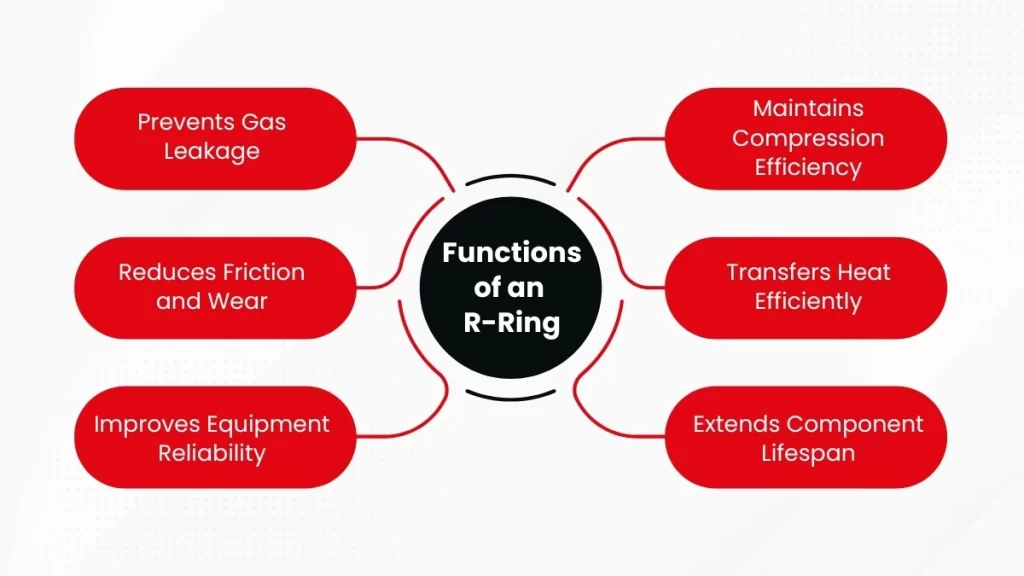
Below are the primary functions that R-rings perform:
1. Prevents Gas Leakage
The main function of an R-ring is to create a tight seal between the piston and cylinder wall, helping prevent harmful gas from escaping the piston and reaching the cylinder.
2. Maintains Compression Efficiency
R-rings ensure that the compressor stays optimal throughout each operating cycle, improving overall efficiency and reducing energy loss.
3. Reduces Friction and Wear
R-rings are designed to create a smooth connection between the moving components, reducing friction and minimizing wear on both the piston and cylinder.
4. Transfers Heat Efficiently
R-rings help transfer the heat generated in the piston to the cylinder wall. This prevents overheating and contributes to stable compressor performance.
5. Improves Equipment Reliability
A perfectly performing R-ring seals the gases properly, helping other components to work smoothly even under high heat and pressure.
6. Extends Component Lifespan
By reducing leakage, friction, and excessive wear, R-rings protect vital compressor components, lowering maintenance requirements and increasing the overall lifespan of the equipment.
Applications of R-Rings
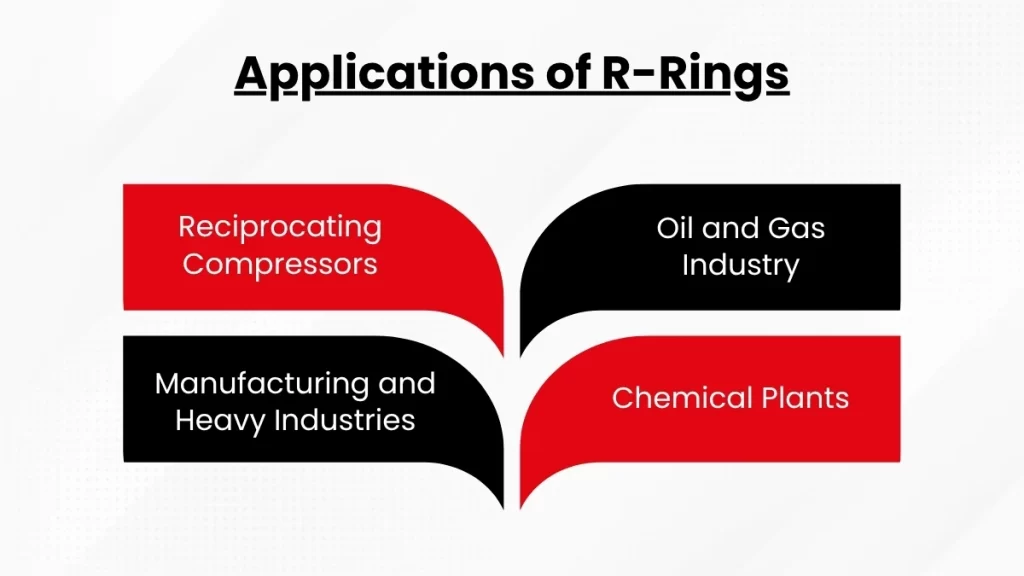
R-rings are widely used in industries with heavy machinery for their effective sealing, pressure retention, and long-lasting performance. Here are some applications of R-rings:
1. Reciprocating Compressors
R-rings are used in reciprocating compressors to prevent gas leakage, maintain compression, and improve the overall compression efficiency.
2. Oil and Gas Industry
In the oil and gas industry, R-rings are used in equipment that handles high-pressure gases to seal them and let the equipment work smoothly.
3. Chemical Plants
Chemical processing equipment requires seals that can operate under high temperatures and pressure, making R-rings a good choice.
4. Manufacturing and Heavy Industries
R-rings are designed to operate under high pressure and heat. Manufacturing and heavy industries require sealing components like this to seal harmful gases.
Materials Used to Manufacture R-Rings
So, if R-rings are this important for many industries, what material are they made of?
1. Cast Iron
Cast iron is one of the most commonly used materials to manufacture R-rings. Cast iron has good wear resistance, machinability, and the ability to provide reliable sealing. It also has a graphite structure that helps reduce friction during operation.
2. Ductile Iron
Ductile iron is a tougher version of cast iron. It has a nodular graphite structure that allows it to withstand repeated mechanical loads, high pressure, and demanding operating conditions.
3. Alloy Materials
Specialized alloy materials are used only when the buyer requires a custom design to withstand particularly high temperatures, pressures, or aggressive operating environments.
Industry Standards for R-Rings
R-rings require precise, perfect design, dimensions, and materials to ensure the machinery doesn’t leak any harmful gases. Dimensions are usually according to the buyer’s requirements.
The material and finish of the ring should be based on factors such as pressure, temperature, gas composition, and lubrication. Since every buyer requires different materials and designs, there is no universal industry standard. Instead, the manufacturer should follow their client’s needs and requirements.
Conclusion: R-Ring Seal
R-rings are an important part of any industry with heavy machinery requiring seals for high pressure and temperature. R-rings provide effective sealing, compression efficiency, and reliable performance to these industries.
The design, material, and surface are created as per the buyer’s specific requirements for the machinery. To get the best finished product, a reliable manufacturer is required. Kolbenring India provides precision-engineered R-rings manufactured according to application-specific requirements, helping industries achieve dependable sealing and long-term performance.
Contact us to get your customized R-rings today with Kolbenring India!
FAQs: Choosing the Right R-Ring
1. What is an R-ring seal used for?
Ans: R-ring seals are used to prevent gas leakage in heavy machinery, increasing the machine’s life and efficiency. It works with other sealing components to maintain compression, improve efficiency, and ensure smooth performance.